I’m celebrating! I’ve been a member of Garden Communicators International (GardenComm) for many years – they are an excellent organization that offers multiple opportunities for professional development. A few years ago, I joined a GardenComm Power Circle – a working group of colleagues that helps strengthen skills in various areas, in this case, for filming and editing videos. After several months in the Power Circle, I made a garden video from footage shot in my garden that I had prepared for a group session. When I uploaded it to YouTube, I quickly got over 24,000 views, which was shocking to me, but it encouraged me to make more garden videos and improve my craft. Here’s that early video:
This year was the first time I entered two of my garden videos in GardenComm’s 2025 Laurel Awards competition in the Digital Media: Video category. I was thrilled to find out that both of my videos were chosen for Silver Laurel Media Awards! 
Silver Laurel winners are then considered for a single Gold Laurel award in each category. I attended the awards banquet in July and to my shock and delight, one of my videos won the Gold!  It was such an unexpected honor and I am spurred on to explore new ideas and new techniques for future garden videos. I am also attempting to keep my garden “video ready” for those perfect video moments and of course, keep Pixie by my side, as she is the real star of the show.
Here is the Gold Laurel winner:
And here is the Silver Laurel winner:
For all of you who follow me on this blog, I thank you so much for your kind words, friendship, and support over the years.
The greatest gift of life is friendship, and I have received it. ~Hubert H. Humphrey
 Bill turned to me and said “you wanted a stream of contrasting color and there it is.” And he was right. In a hillside awash with yellow native primrose, we had planted a weaving line of red yarrow a year ago and now it was starting to make a statement.
 We’re at the end of “Pollinator Week” here in the U.S., an opportunity to draw attention to the plants and practices that build habitats for our pollinator friends. For the past four years, I have systematically eliminated groups of plants that have either been rated as invasive for our area or simply don’t provide any value to pollinators or wildlife in general. Replacing them with natives has resulted in a massive shift in the number and variety of birds, butterflies, and other pollinators that now reside here. The dawn chorus is astounding when Pixie and I step into the garden each morning – take a listen for yourself!
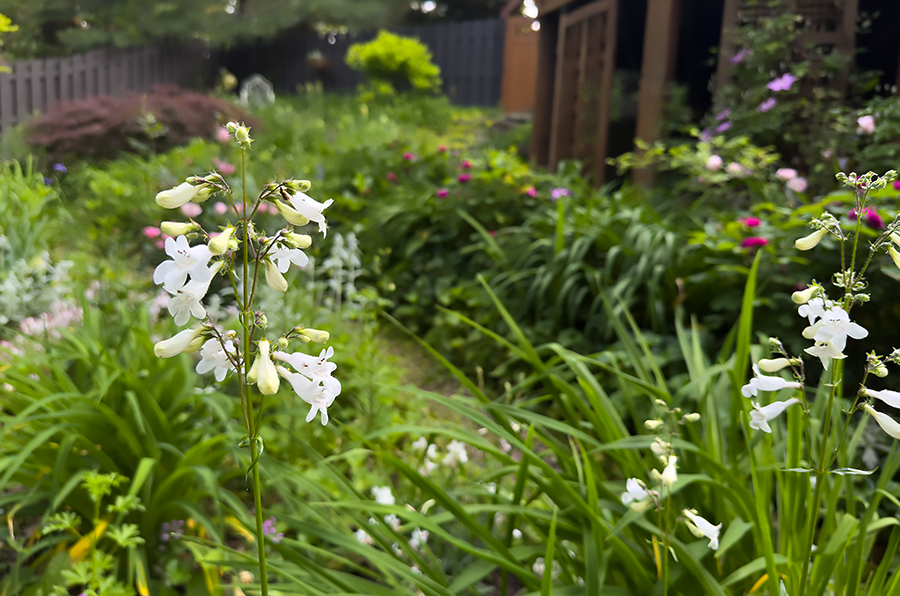


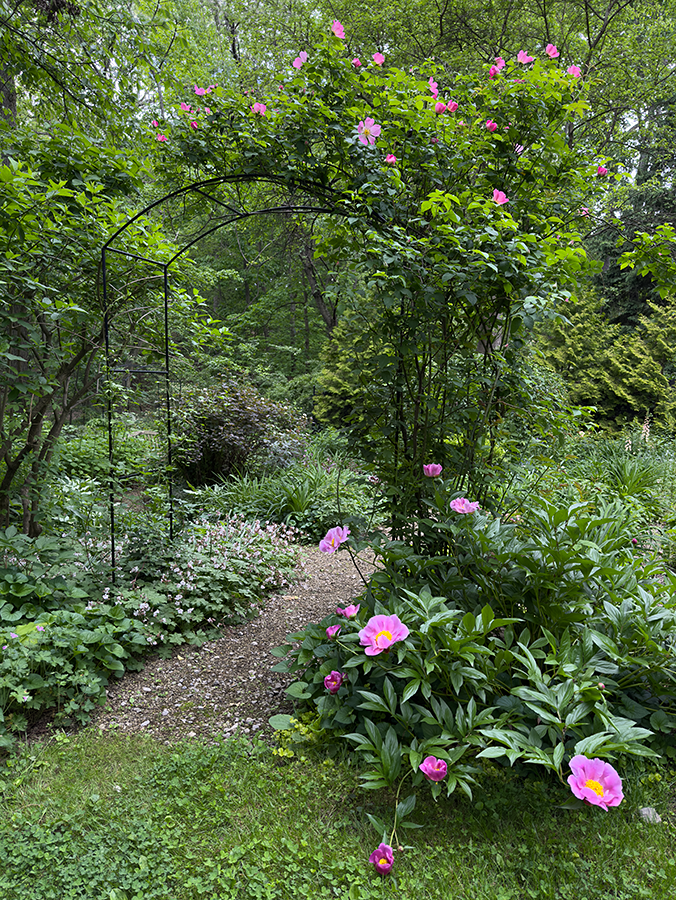
 In the past several weeks, I’ve finally been able to immerse myself in the beauty of the garden.


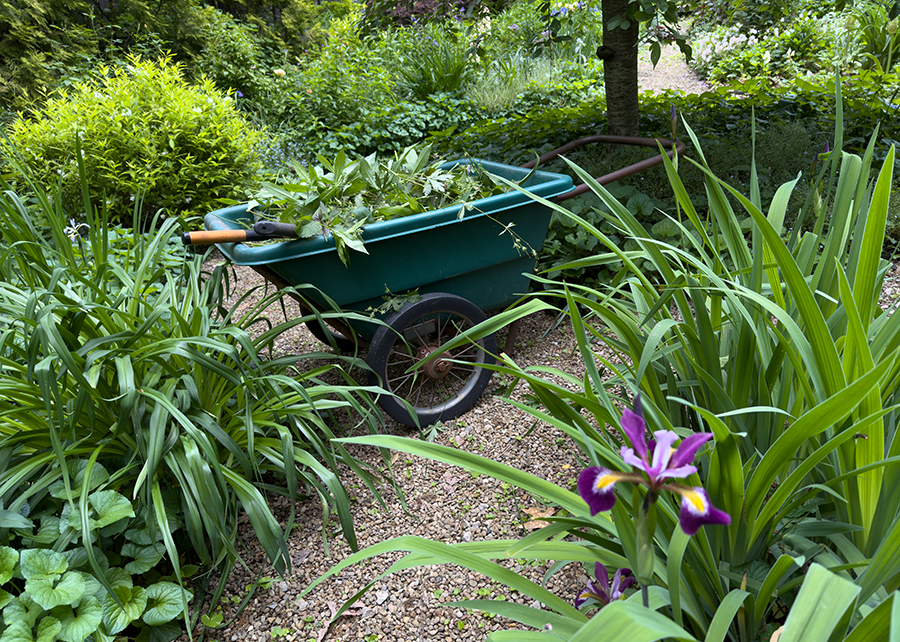 Mornings with Pixie have been so joyful for both of us as we settle into our usual routine,
 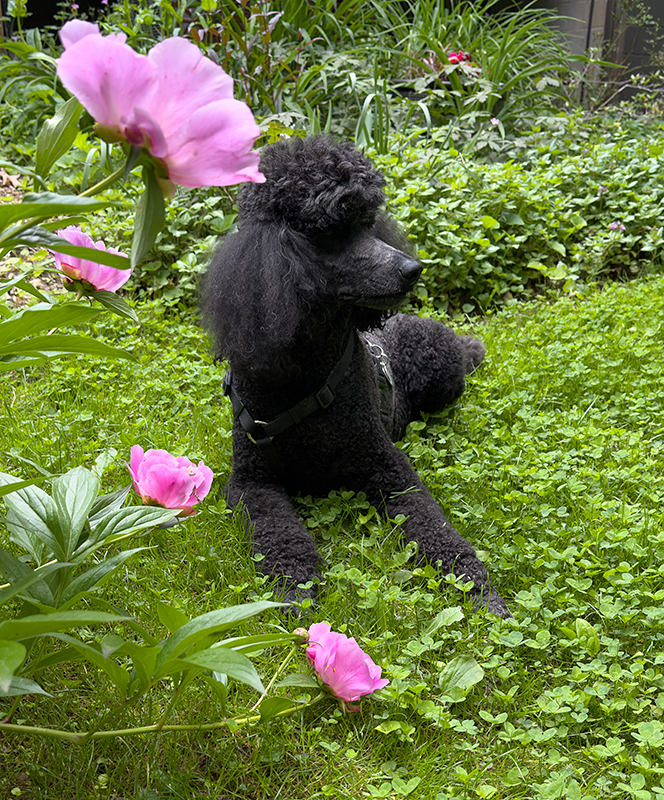 and the garden has never looked better now that the eye and the hand of the gardener is constant once again.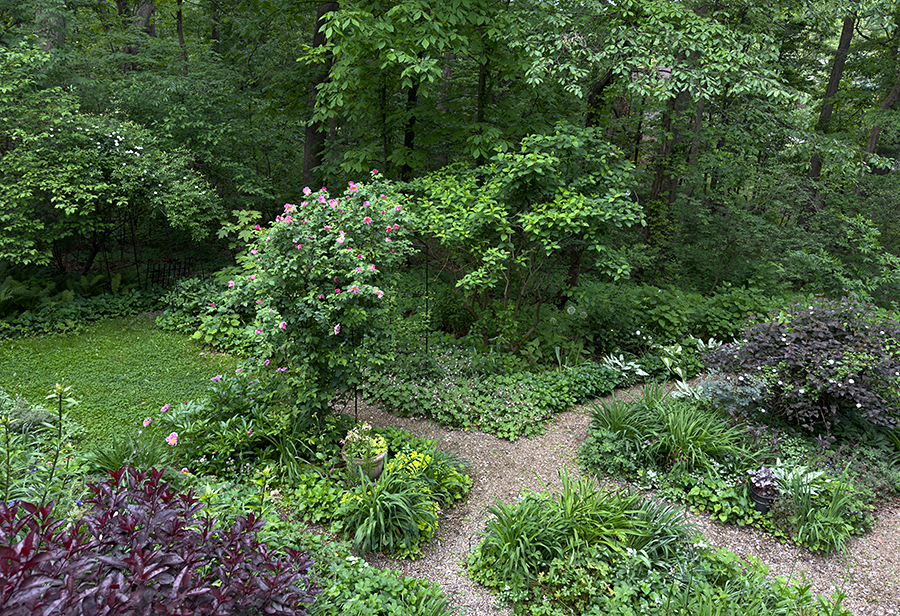
 These days, I am filled with a sense of joy and hope as I awaken each day, eager to reacquaint myself with the plants, the woods, and the creatures that make their home there.
 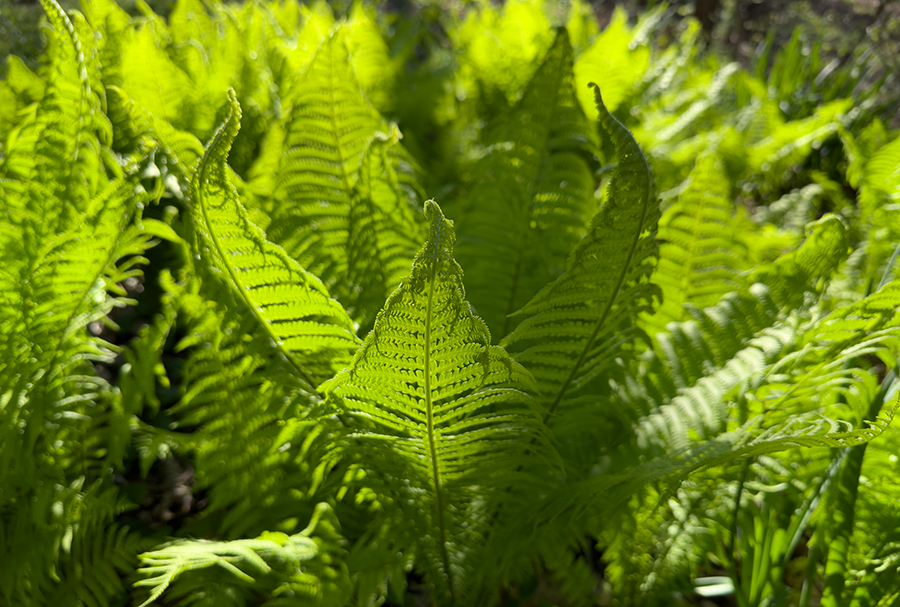 Absence did make the heart grow fonder and I treasure every moment that I spend in my garden, immersed in the scent of flowers and songs of birds.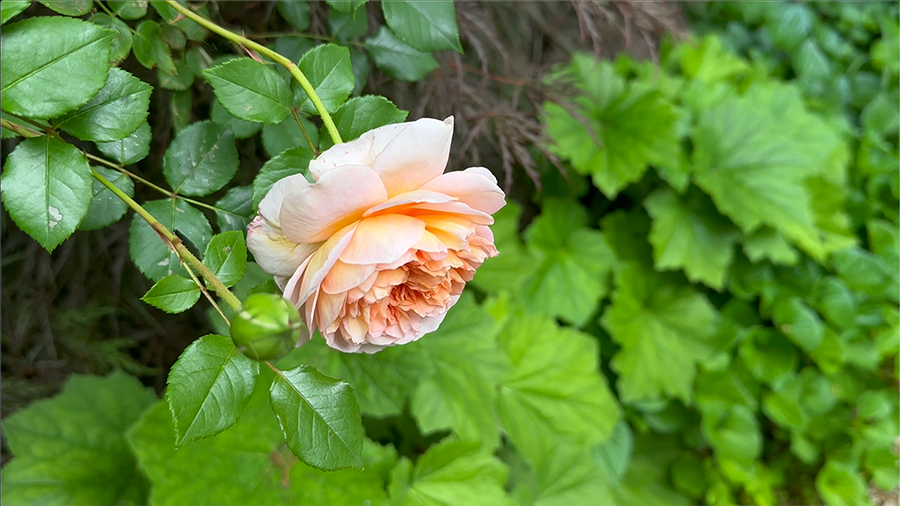
 Earlier this spring, we were having a tree trimmed away from the roof of the house when the arborists found that it was completely hollow – “like a straw” they said – and needed to come down. They did a magnificent job of bringing down the trunk and refitting it together so that I could make it a garden feature as part of the new woodland walk.


 composerinthegarden