Never say there is nothing beautiful in the world anymore. There is always something to make you wonder in the shape of a tree, the trembling of a leaf. ~Albert Schweitzer
Each day brings more plants into leaf and flower. As I wander through the woods and gardens each morning, I realize that it wasn’t just color that I missed in this long winter past. It was the amazing cornucopia of shape and form that emerges from the trees and shrubs, the miracle of plants springing up from the bare earth in fresh new clothes. The early morning light gets caught in the shape and trembling of leaf and flower and I get lost in the looking. Enjoy.
Oh what a beautiful morning,
Oh what a beautiful day,
I’ve got a wonderful feeling,
Everything’s going my way. ~lyrics by Oscar Hammerstein II, from “Oklahoma!”
I’ve spent the early hours of the past few mornings in the garden, with the moments between weeding and planting spent enjoying the sparkle of early morning light. The woods are showing a soft green blush of unfurling leaves as the garden begins its April bloom cycle. Yesterday morning a golden shimmer of light reflected on dewy flowers; this morning the almost full moon still hung in the morning sky while the birds sang their dawn chorus. I couldn’t help myself – I broke into song with them. “Oh What a Beautiful Morning!” is a personal favorite of mine and it seemed so descriptive of the moment. “All the sounds of the earth are like music” – who knew Oscar was so poetic?
Here are a few images from the late April garden. Enjoy!
Evensong ~ 1. a daily service in the Anglican church, also called evening prayer; 2. a song sung in the evening
Iris reticulata ‘Harmony’
This Easter Saturday, I spent most of the day in the garden. Early that morning, the bird chorus was joyous and noisy. The first day of true spring weather arrived with warmer temperatures and cloudless blue skies and the birds were celebrating. It was the time for garden cleanup, pruning shrubs, raking leaves from the garden beds, and a general assessment of the state of the garden and its possibilities for the coming season. I grabbed the camera to record the few flowers in bloom – hellebores, crocus, Iris reticulata, and intense blue of a lonely Scilla siberica. The sun shifted through the sky throughout the day, guilding the garden with luminous golden light. I constantly refilled my water bottle and labored throughout the day interspersed with plenty of rest sessions, usually on a stone step facing south, absorbing the full face of the early spring sun.
As I finished my work for the day and strolled through a garden now ready for the season, I became aware of how different the garden sounded in the early evening. The raucous morning chorus had mellowed into the last songs of the fat robins sorting through the garden beds for an evening worm snack and the chirps of a chickadee who was exploring the beauty bush for a possible nest site. Their songs were separated by moments of quiet; a golden glow had descended and the song of evening matched it, relaxed and reflective.
Every culture and religion has a set of songs that matches the time of day. Matins, vespers, compline, all music for a time of day. Indian musical culture has scales and songs, ragas, that are only to be used for specific times of days. I found myself wondering, as I wandered through the evening garden, if this tradition arose from gardeners, or at the least, those paying attention to nature, to the rhythm and song of the natural world. How different is morning song from evening song! One greets the day with joy and then later celebrates the work of the day and its attendant rest with song punctuated by moments of silence. Here is a lovely video of evening bird song in Vancouver that I discovered online that most closely resembles the sound of my garden last evening.
Although I can capture a few blooms, I cannot possibly capture the feel of this day with my camera. The slanting gold of evening skies, the winter sun shining on a few bold blooms, an ephemeral butterfly moving so quickly that I cannot capture it, all are etched in my mind’s eye. The camera might capture nothing more than the brown and gray landscape of an early spring garden but there was so much more, a garden of possibilities. The light shifting through the bare woods. Nascent buds swelling on shrubs and trees. The fresh smell of soil awakened from the frozen grip of winter. This day now only resides in my memory of a perfect span of time spent in the company of birds, sunlight, and the spirit of the garden. Spring has arrived quietly and nestled in my gardener’s heart. It may snow tomorrow or the next day, but for me, spring has come on an evening song and I treasure the moment.
In the past few weeks, the silent landscape of winter has shifted into a vibrant chorus of bird song as the winged ones return and begin to court and nest. The spring equinox has passed, and though winter lingers on, each day grows longer and brighter – light is returning to the world. A time of renewal in the earth also seems the time to renew one’s spirit.
Ten years ago, I composed a set of pieces for the 125th Anniversary of Duquesne University entitled “The Trees of Righteousness.” The text, taken from the biblical sources of Isaiah, Ezekiel, and the Psalms, explored the sense of being called to a purpose in the world. The second movement, “Be Neither Silent Nor Still” always comes to my mind during Lent and Holy Week. It is about the dark night of the soul, about searching for light as well as a cry for compassion and justice. As we emerge from the long dark nights of winter, the song reminds me that this is a universal experience of being a human on the earth, regardless of one’s religious or spiritual beliefs. It was written for my dear friend and colleague Guenko Guechev, whose magnificent voice you will hear on the recording. May you find renewal of the heart, mind and spirit this spring.
This slideshow requires JavaScript.
Be Neither Silent Nor Still from “The Trees of Righteousness” music by Lynn Emberg Purse, @2003
O God, be neither silent nor still.
I look for the light but all is darkness I look for the light, the light of dawn, but I walk in shadow. I reach out like a blind man, a blind man along a wall waiting for justice, for justice, and there is none.
O God, be neither silent nor still.
The wretched and the poor look for water and find none. Their tongues are parched with thirst, parched with thirst. Will you not turn the wilderness into pools and dry land into springs of water?
O God, be neither silent nor still.
Give me a new heart, give me a new heart and put a new spirit within me. Take the heart of stone from my body, the heart of stone and give me a heart of flesh, of flesh, a new spirit within me.
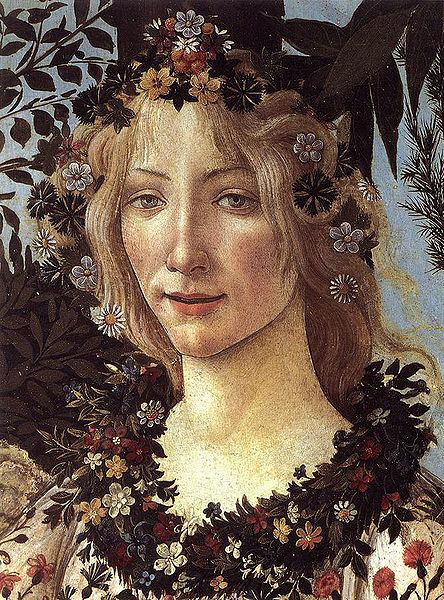
Primavera, the Italian word for springtime, is also the name of Botticelli’s famous painting. I was privileged to see the original in the Uffizi Gallery in Florence, Italy, and stood before it for hours, entranced by its beauty. There are over 500 identified plant species depicted in the painting, including 190 different flowers.
Detail of Flora
As I write this, the earth shifts into the vernal equinox, the time when there is an equal number of hours of light and dark all over the earth, and the official start of spring for the northern hemisphere. I’ve been dreaming of light in dark places lately, even of singing of light in those places. Without light, we cannot see color and it is color that is promised by the arrival of spring. As in Botticelli’s depiction of Flora scattering flowers on the earth, the vernal equinox signals a shift in the turning of the earth to more light and new growth. Happy springtime!