
Multiplicity – a very large number (the simple definition) – from Merriam-Webster
A snowstorm quietly moved through western Pennsylvania earlier this week, sifting fine wet snow onto the garden and woods, snow that clung to every branch, leaf, and twig. An early morning foray outside revealed a magical wonderland, a multiplicity of shapes and forms delicately outlined in white.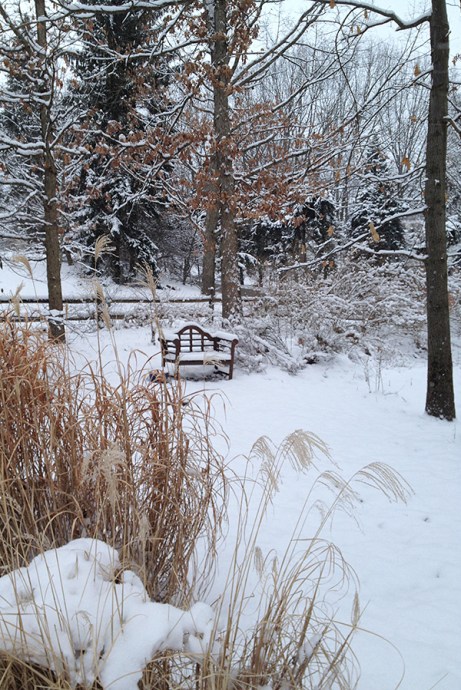
The first inch of snow melted on pavement, outlining stepping stones.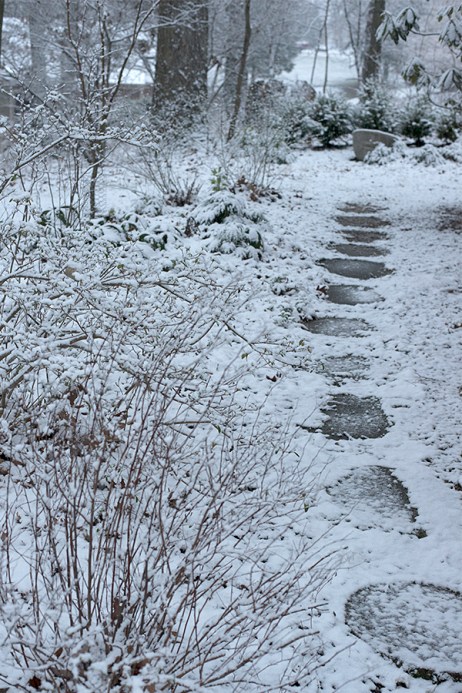
An oak leaf on the driveway became a pillow of white against the black asphalt.
Bronze leaves still clinging to branches held small tufts and caps of snow.
A loose hedge of forsythia was transformed into an ethereal cloud.
Ornamental grasses stood tall, capturing snow crystals in their curved inflorescences.
The straight lines of a bench echoed the bold trunks of trees.
The lower garden became a study in curves made up of a million tiny lines of black and white. I became lost in the looking, entranced by an endless multiplicity of growth and life stripped down to its skeletal beauty. Winter suddenly became as beautiful as any fair day in May.
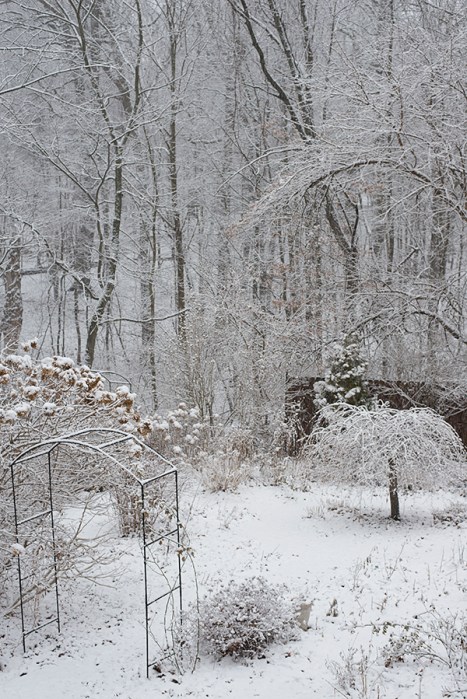
What an amazing world we live in! A complex harmony of shape and form and line that changes from day to day, season to season, beautiful without measure.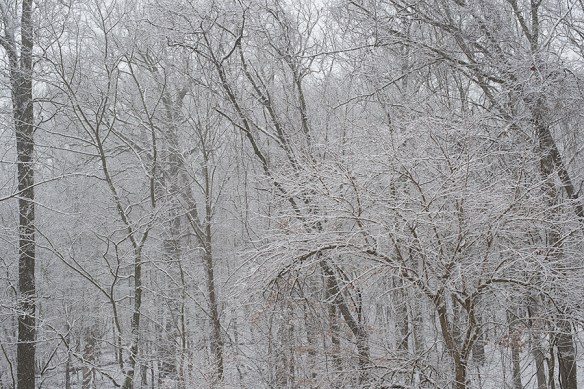
All photos ©2016 Lynn Emberg Purse, All Rights Reserved
 For the past few years, I’ve been taking non-credit courses in subjects that interest me as a way to recharge and challenge my creative juices. This semester I’m taking a studio art class in drawing, something I haven’t done for many years. I was a bit nervous – could I still do this? – but as I began to haunt art stores and buy supplies, apprehension was replaced by growing excitement. I remember the gathering of artistic tools from my college days and the delight I felt in drawing and painting classes. Sketchpads, pencils, charcoal, erasers – a potential treasure trove!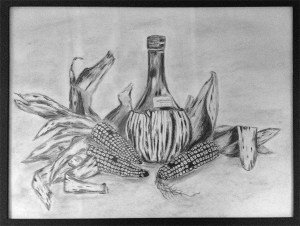
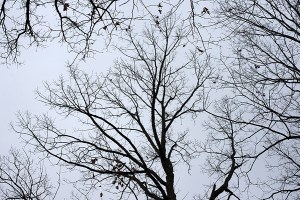


 The week between Christmas Day and New Year’s Day has always been a special time for me. The everyday world seems to pause and recede, leaving time for inner reflection, time to consider the past year and the future to come.The Norwegians have a name for this season – Romjul. According to
  I’ve often thought about liminal space (
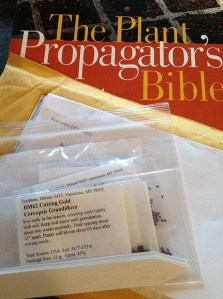 As I reflect on the year past and prepare for the year to come, the garden is on my mind. I hope to have my garden open to visitors this summer and have been busy preparing while the weather remains mild. The first packet of seeds came this week, along with a book on propagation techniques. More seeds are on their way, the light table in the basement is clean and ready, and visions of the coming garden season creep into my dreams.
 I’m not ready. I’m not ready for Christmas, I’m not ready for winter, I’m not ready to wake each morning into the dark and cold world of late December. This morning, I awoke to snow and bitter temperatures under a dark gray sky and murmured to Angel “I’m not ready.” She sighed a doggy sigh and snuggled closer, ready to dream some more and pulling me in her wake.
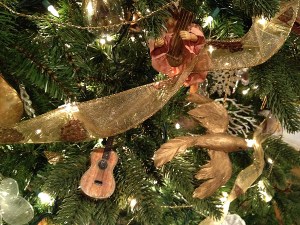 It is no wonder that Christmas and many other traditions celebrate this time of the year with lights. In the northern hemisphere, the light of dawn comes late and the fading light of dusk comes early. With so few daylight hours and so many of them gray and dark, the bold and hopeful lighting of many lights is necessary to the human spirit and a reminder that the days will soon grow longer.
 has allowed me to work in the garden deep into what is usually a cold snowy month. I’ve accomplished garden chores that often get delayed until spring – the leaves gathered and shredded, the trees and shrubs pruned, the summer soil from the pots emptied into the woodland’s edge for building new beds. I’ve already planned next year’s garden – the seeds to start, the plants to order, the perennials to propagate. In fact, it is focusing on next year’s garden that has softened the sting of the coming of winter.
 The effects of El Niño are predicted to extend our weather into a long mild winter here in the mid-Atlantic states. It may be global warming, it may be a temporary weather pattern, but whatever it is, I admit that I will welcome a mild winter after the severe weather conditions that have prevailed for the past few years.
 November and December have been very mild this year, encouraging me to work in the garden late into the season. But this morning brought both fog and a frost, turning the world into a frozen fairyland. The moisture from the fog that coated leaf, flower, twig, and spiderweb was transformed into a spectacular structure of glistening crystals. Sadly, the last lingering roses of summer have come to a sudden halt, now preserved in ice.
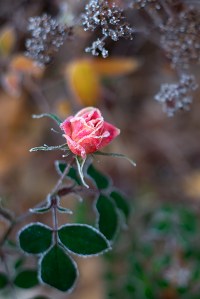 I have a few more shrubs to plant today once the temperatures rise but it is probably the last time I can play in the dirt. Dreams of next year’s garden are starting to stir as I begin a list of seeds and plants to be ordered in the dark days of winter. Enjoy the photos of the last blooms of summer, both in flower and frost, while you listen to Irish tenor John McDermott sing this wistful song (video at the bottom of the page).


 composerinthegarden