The garden is moving into its most colorful time of the growing season. Daylilies and Echinacea have come into bloom, tall lilies release their fragrance into the air on warm days and, even at twilight, the white Hydrangea flowers make a bright statement in the circle garden. 
One of my favorite garden areas is the Grape and Lemonade bed, where all of the flowers are purple and lemon yellow. 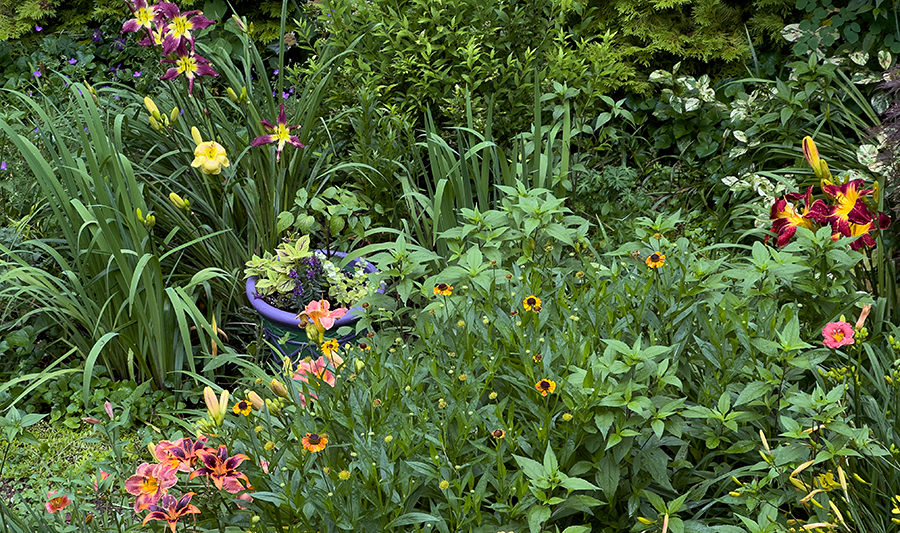 I’ve been wanting to paint a flower pot in those colors to place in the bed in order to amp up the color and finally had the time to do it. I’ve always been inspired by artist and gardener Keeyla Meadows for the way that she paints large garden pots and then plants them in the same color palette. You can see some of her work here or visit her on Instagram @keeylameadows.
While I’m not nearly as adventurous as she is, this is my first attempt at painting and planting a pot to echo a color theme.


And here it is in the garden – even from far away, the rim of the pot stands out and will add color until the end of the garden season. 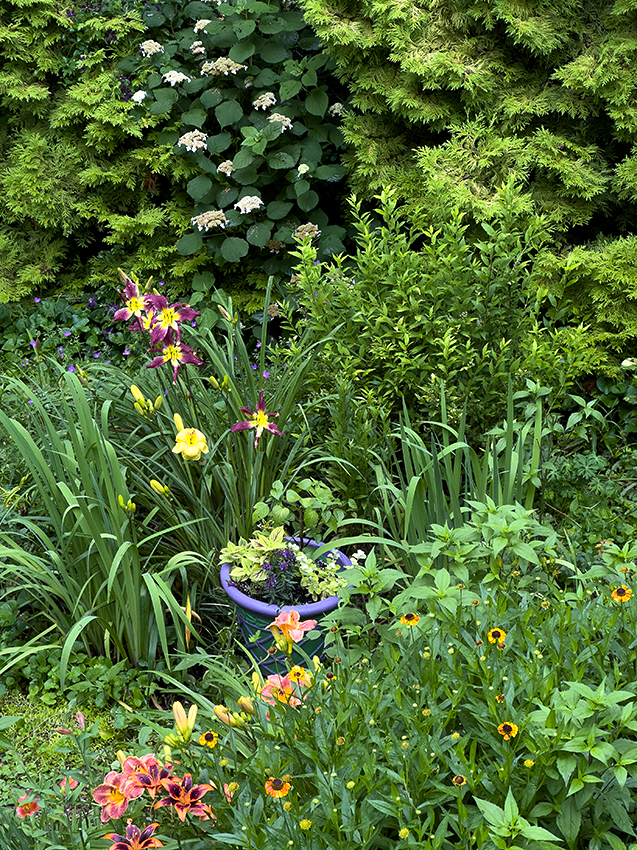
I created a short video of the Grape and Lemonade bed and how I painted the pot, which I consider a small gift to a pretty part of the garden. It is the first video in a series I’m starting on my YouTube channel called “Spotlight in the Garden”. Enjoy!
I hope you are enjoying floral fireworks at the height of summer, and if you are lucky, an evening show of fireflies.
All text, photos, and video ©2025 Lynn Emberg Purse, All rights reserved.
 Bill turned to me and said “you wanted a stream of contrasting color and there it is.” And he was right. In a hillside awash with yellow native primrose, we had planted a weaving line of red yarrow a year ago and now it was starting to make a statement.
 We’re at the end of “Pollinator Week” here in the U.S., an opportunity to draw attention to the plants and practices that build habitats for our pollinator friends. For the past four years, I have systematically eliminated groups of plants that have either been rated as invasive for our area or simply don’t provide any value to pollinators or wildlife in general. Replacing them with natives has resulted in a massive shift in the number and variety of birds, butterflies, and other pollinators that now reside here. The dawn chorus is astounding when Pixie and I step into the garden each morning – take a listen for yourself!
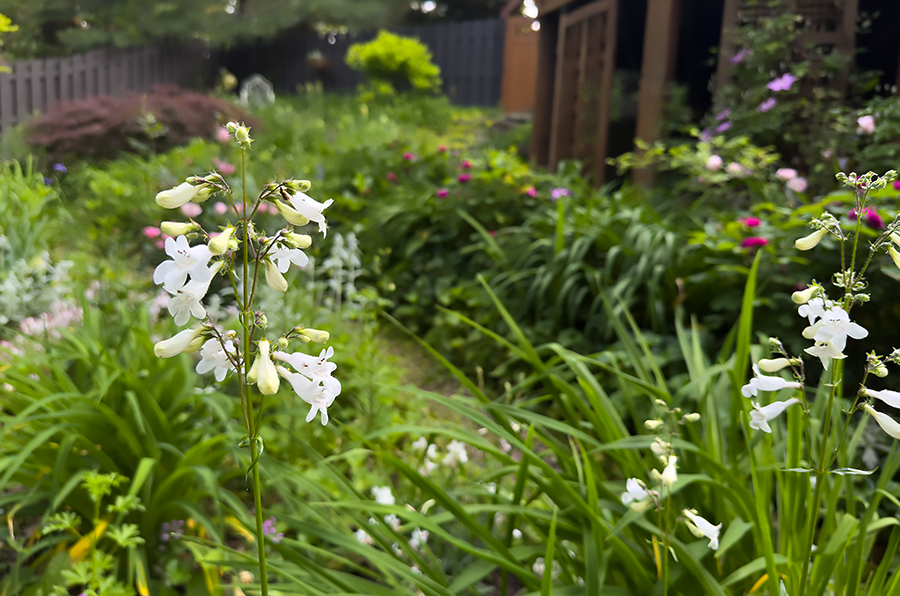


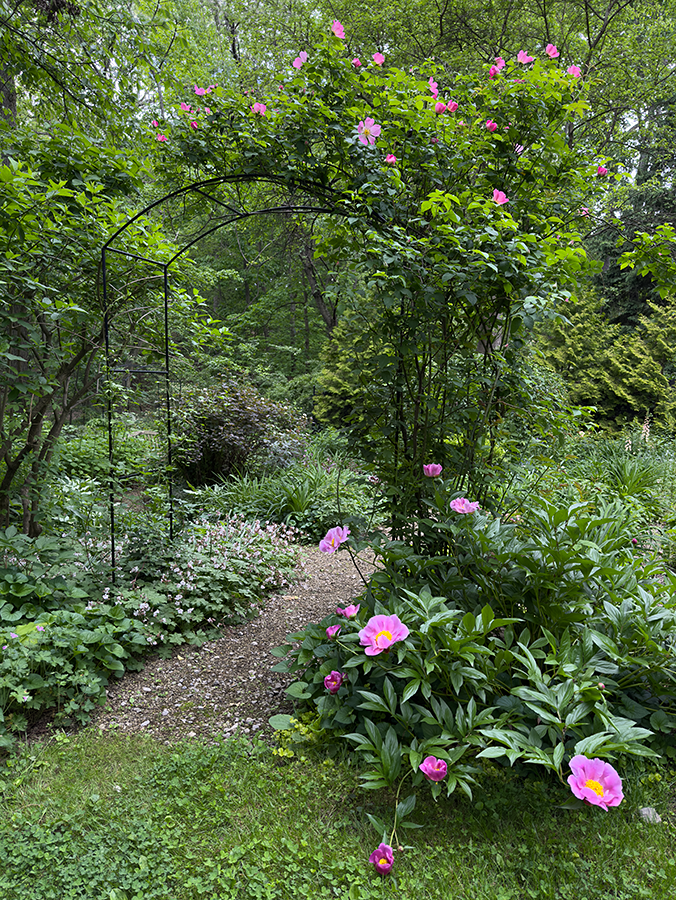
 In the past several weeks, I’ve finally been able to immerse myself in the beauty of the garden.


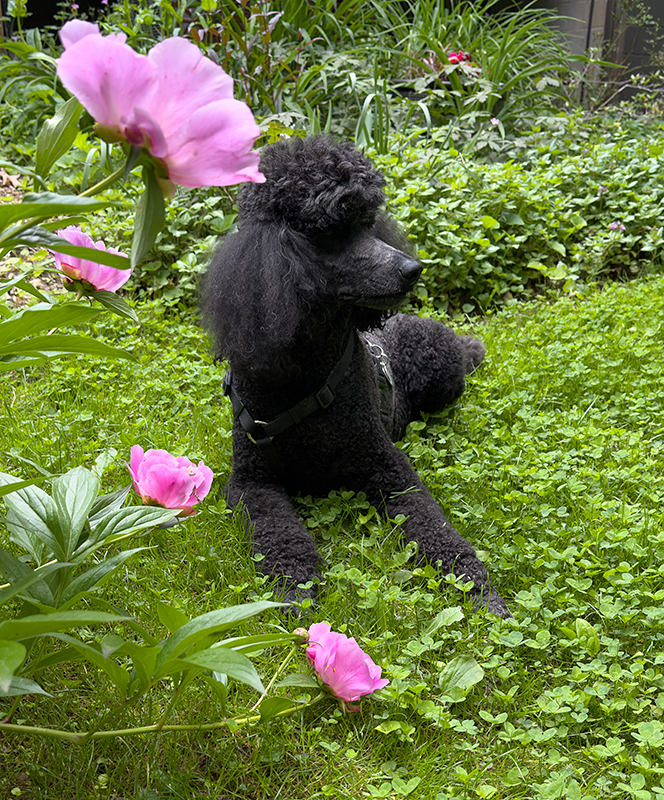
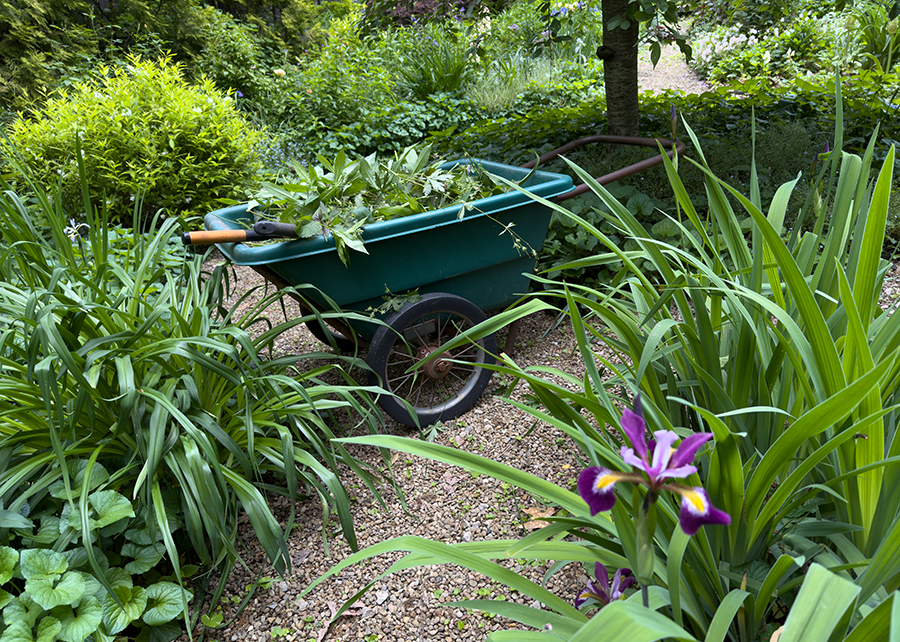 Mornings with Pixie have been so joyful for both of us as we settle into our usual routine,
  and the garden has never looked better now that the eye and the hand of the gardener is constant once again.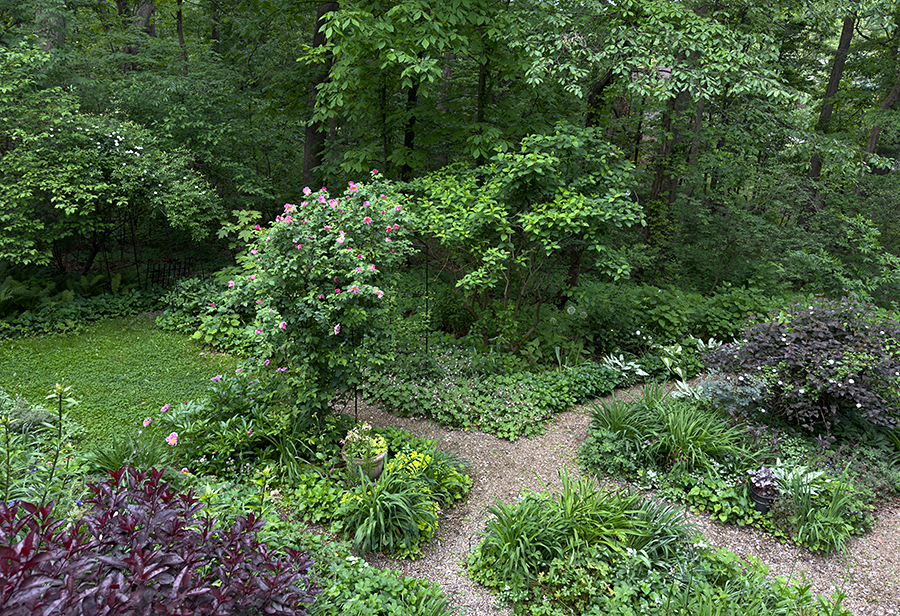
 These days, I am filled with a sense of joy and hope as I awaken each day, eager to reacquaint myself with the plants, the woods, and the creatures that make their home there.
 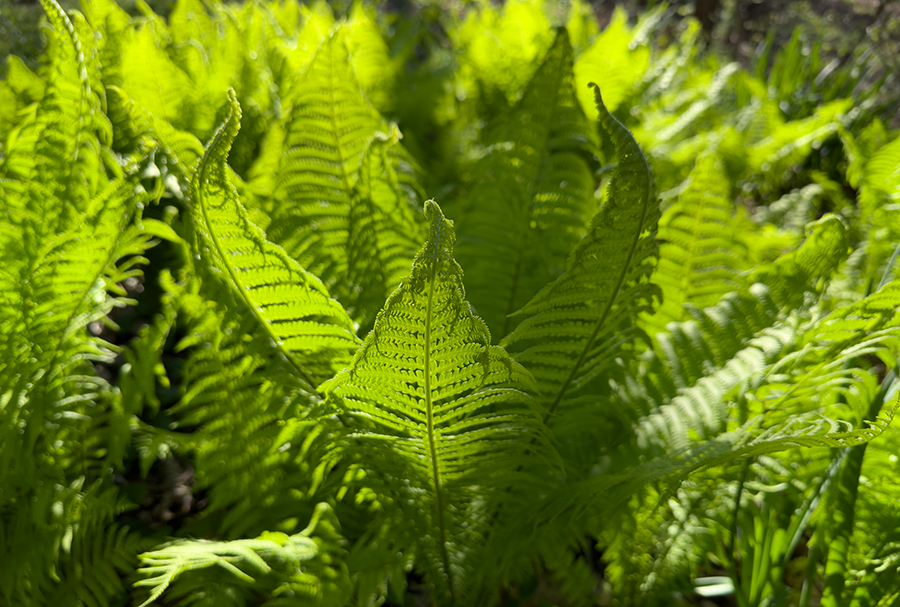 Absence did make the heart grow fonder and I treasure every moment that I spend in my garden, immersed in the scent of flowers and songs of birds.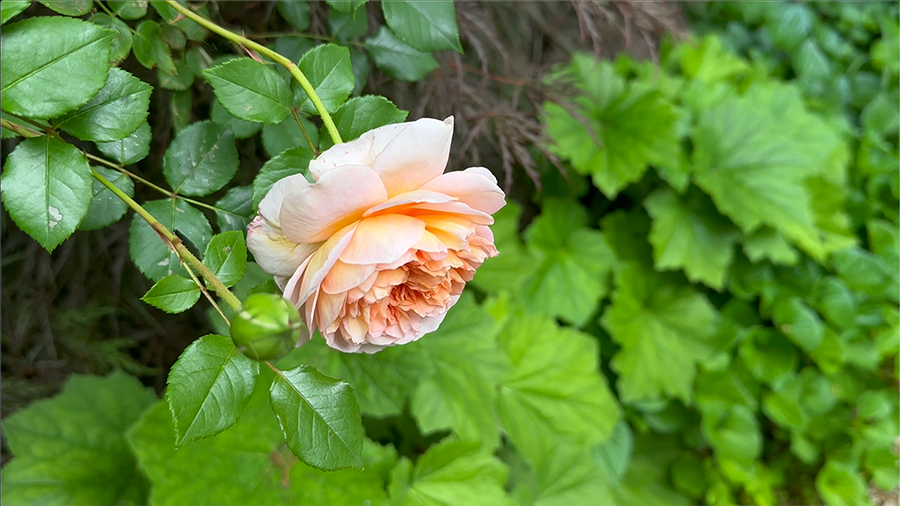
 composerinthegarden