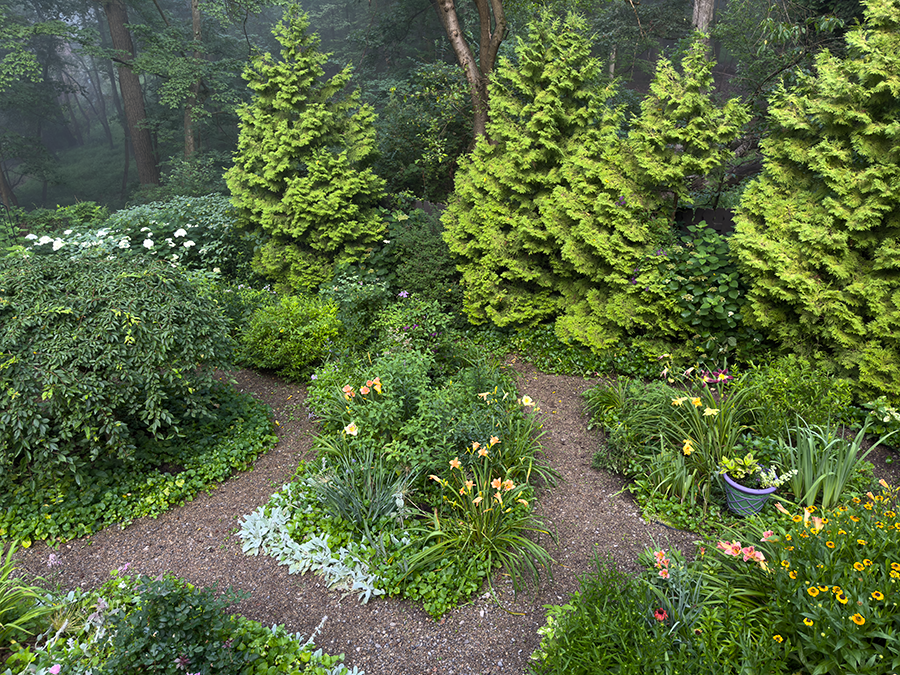
A greenness grew

Spring drew on…and a greenness grew over those brown beds, which, freshening daily, suggested the thought that Hope traversed them at night, and left each morning brighter traces of her steps. ~Charlotte Brontë, Jane Eyre

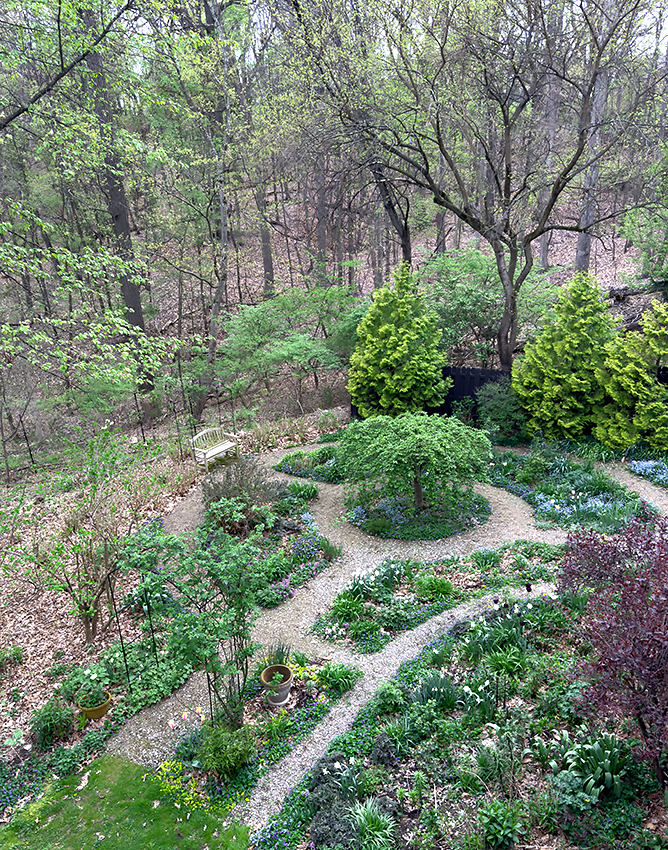
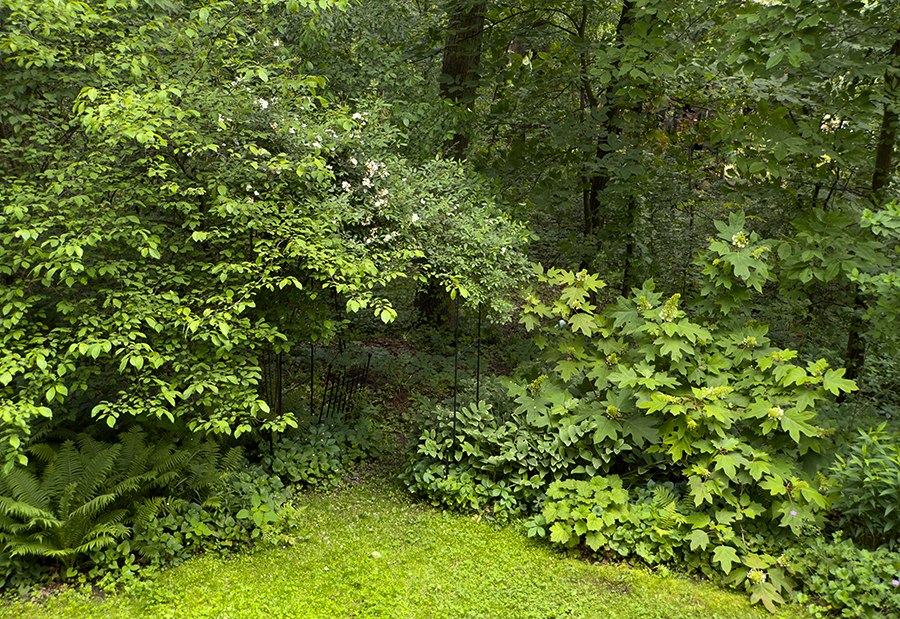
On this first day of May, I look out the window and see green – green! – on the tree branches. Flowers have been blooming since February – snowdrops, crocus, daffodils, tulips – and their color is so welcome.  Yet when the woods light up in delicate green, it feels as if spring is complete.

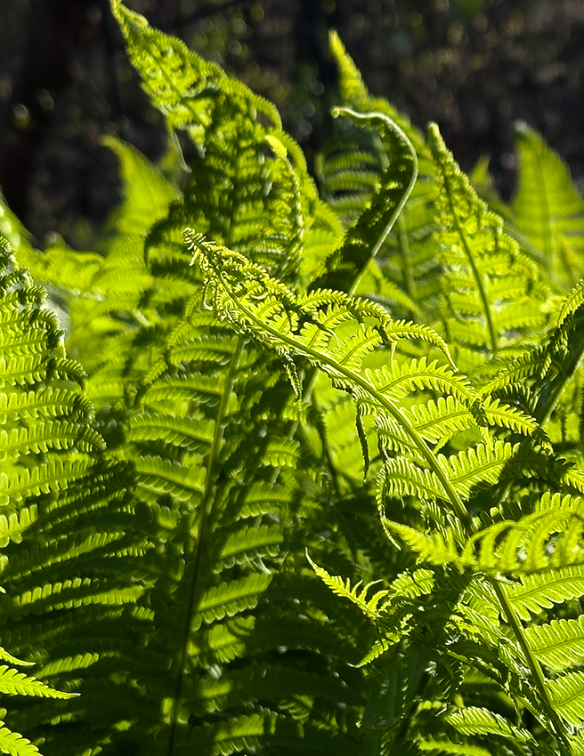
The ostrich ferns have completely unfurled, refracting light through their intricate fronds

while the sunlight pouring through white daffodil ‘Bella Coola’ turns its petals translucent.

The weather has had several wild swings this spring, hot summer temperatures for days in early spring followed by deep drops into bitter cold, the process repeated again and again. Yet the plants have survived somehow, resilient and beautiful.

Parts of the garden have come fully into bloom – the grape and lemonade bed is always its showiest this time of year.

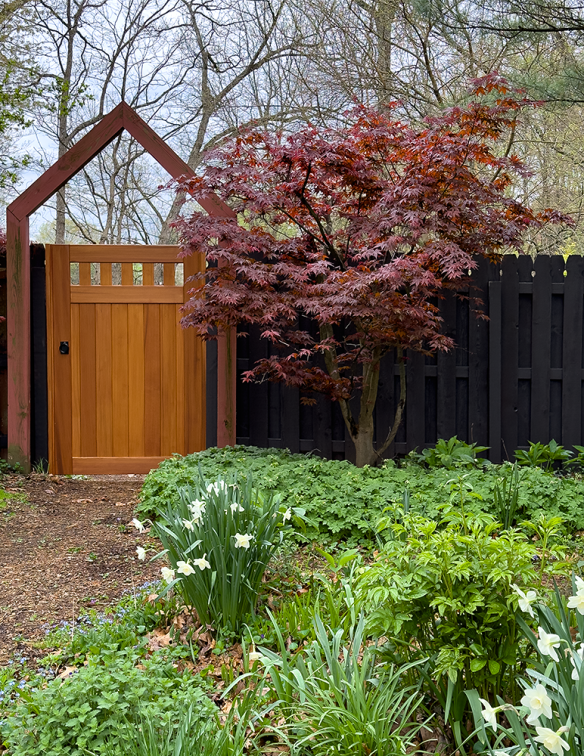
After years of tolerating our makeshift garden gate built of fence parts, I found a beautifully crafted gate to create a dramatic entrance into the garden.

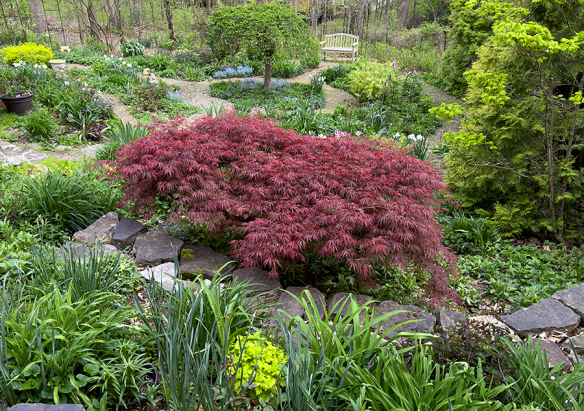
Green isn’t the only foliage color in the garden now – the red Japanese maples have fully unfurled their leaves

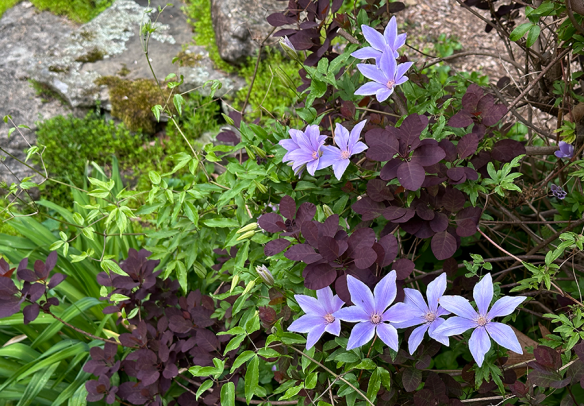
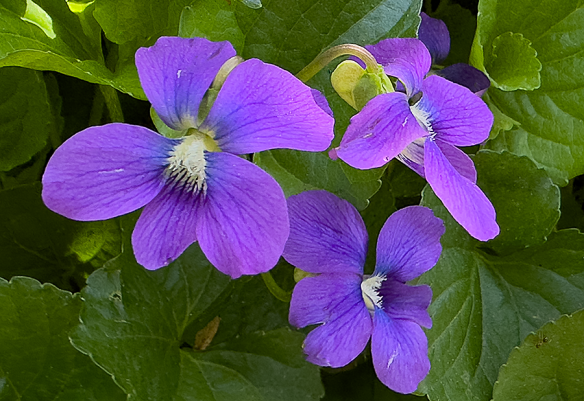
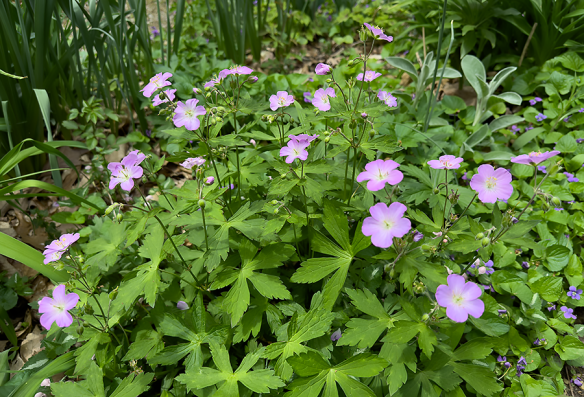
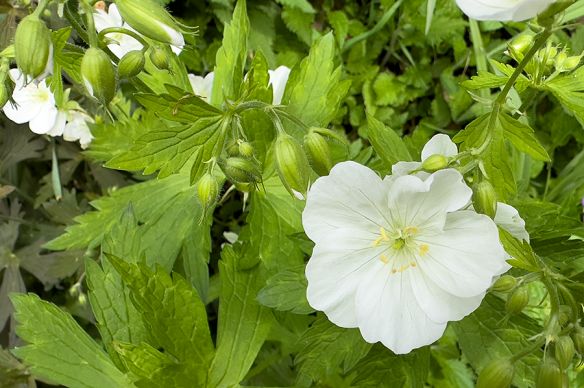
as has the purple smokebush entwined with Clematis ‘Sweet Sugar Blues’.  Our wild violets (Viola sororia) have been blooming for weeks and are now joined by the soft blue and white blossoms of hardy geraniums.
My latest garden video traces the gradual emergence of spring and the light that shines through the garden at this bewitching time of year.

Wherever you are in the world, and in whatever season you find yourself, may you see the light shining through the beautiful things around us.

Playing with color

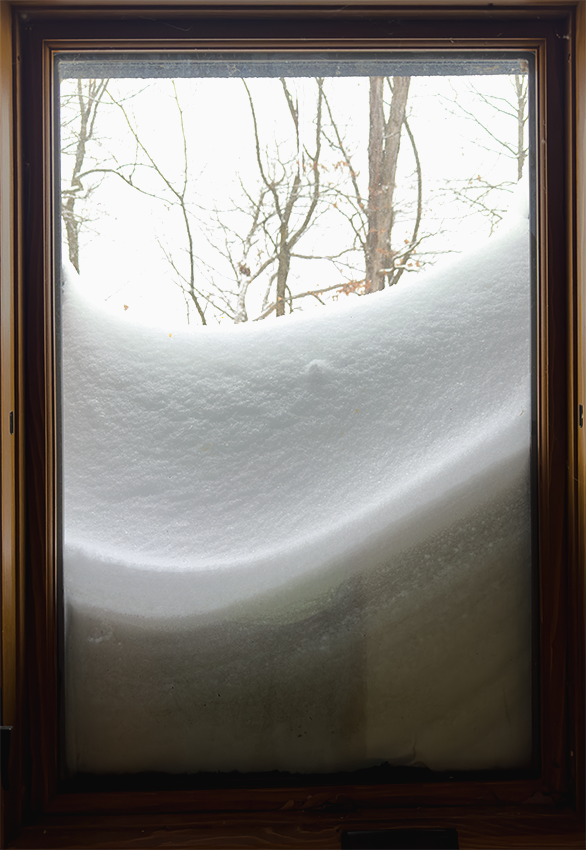
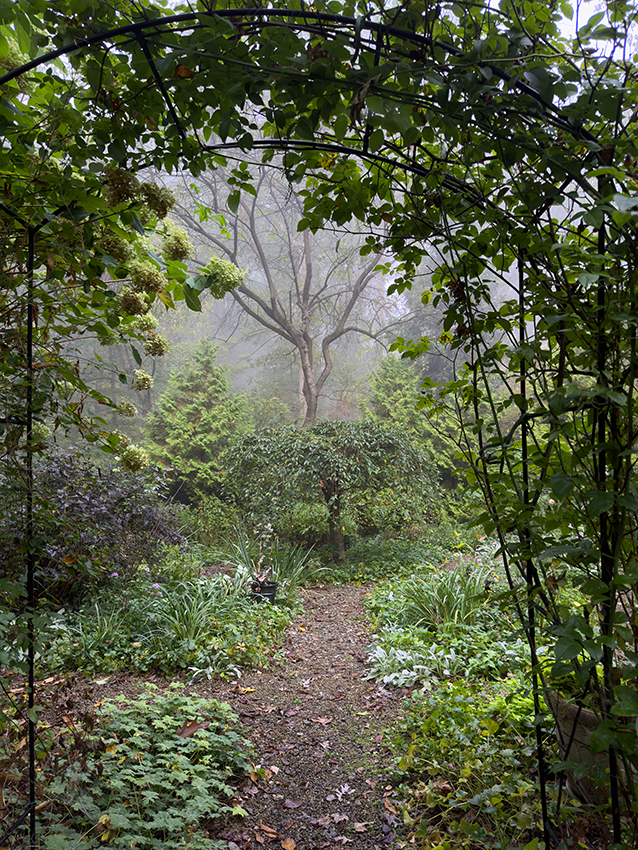
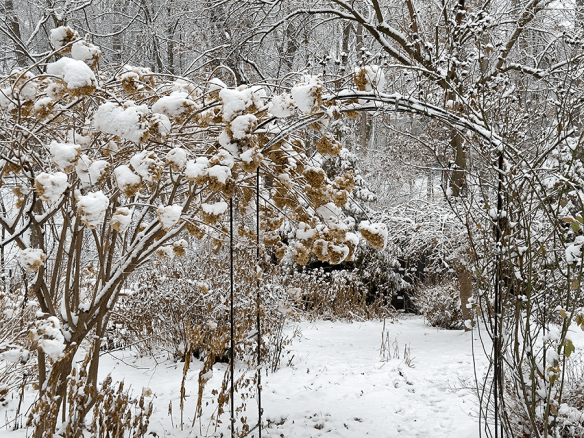
We continue to have beautiful snowfalls snowy arbor

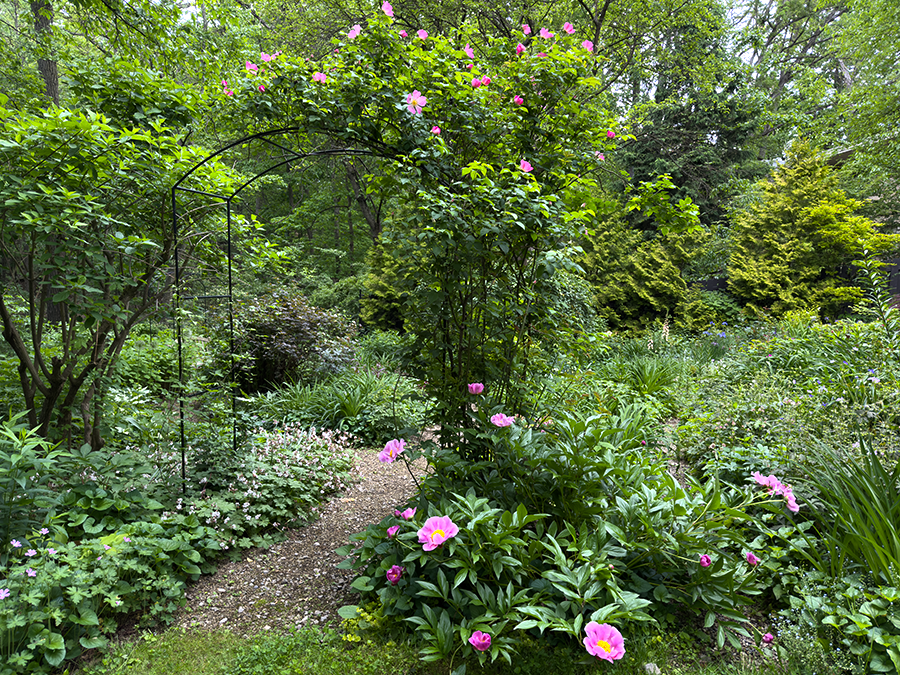
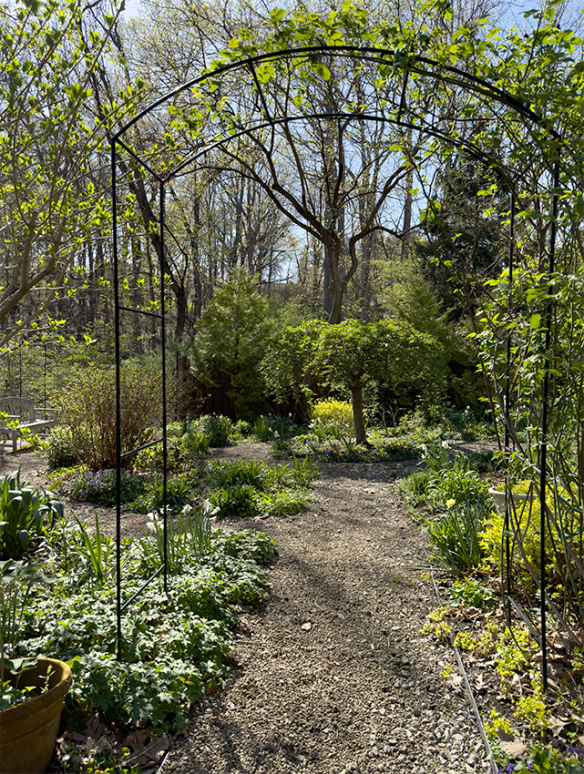
followed by melt, thaw and freeze. On gray winter days, there is nothing more satisfying than gathering colorful pictures of the garden together to create a story.April arbor

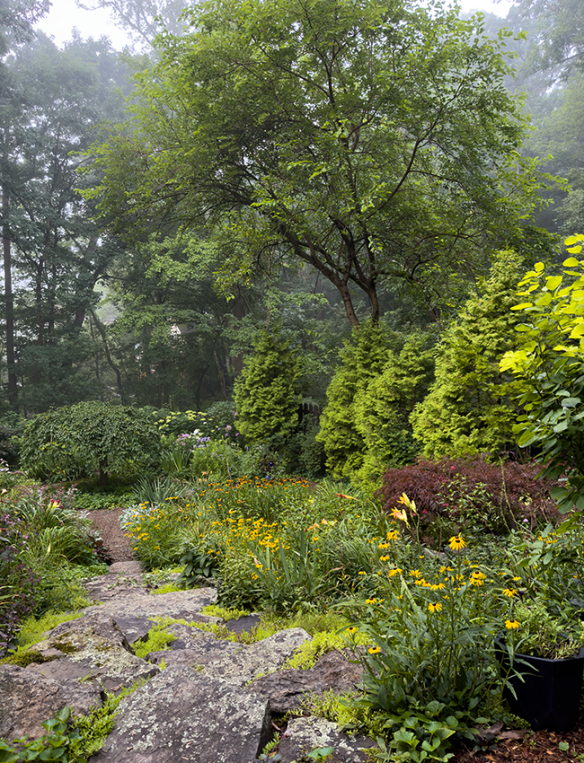
 In one way, it is looking back at the previous year’s triumphs in the garden stone steps in the mistbut in another, it is a way of tracing the exploration of an idea over a long period of time.
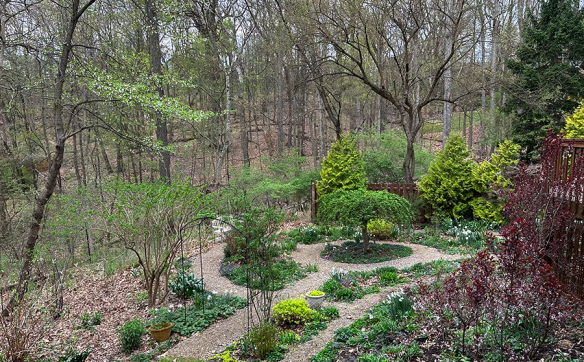
Even as I gradually transform the garden into a more pollinator friendly place, I will probably never let go of a few of those plants that inspired me to garden in the first place. I have removed hundreds of plants in my garden in the past three years – those that were invasive or did not serve the eco-system that I am trying to build – and added hundreds of others that contributed to life in the garden. But roses (click on any photo to see a larger image)

daylilies, peonies, lilies, and others

– many of which are interlopers in the North American landscape – still have their place in my heart and I’ve kept those I love the most and which do no harm.  My garden behind the fence is still arranged by color and I continue to play in that most ephemeral of paintboxes.

A few weeks ago, I collaborated with a group of gardeners on YouTube to create our own videos of how we interpreted the Art of Gardening, then sharing links to each other’s videos. I immediately gravitated to playing with color – it is something that looks good on the screen and people in the northern hemisphere are desperately hungry for color during our long gray and white winters. Creating short garden videos has become a new form of expression for me – I continue to learn and refine my skills while working to add new techniques. My instincts proved correct – my collaboration video has gone a bit viral and gives me encouragement to pursue this avenue of expression. Enjoy a feast of color for the eyes, spring is not far off!

All text and images @2024 Lynn Emberg Purse, All Rights Reserved (excepting the collaboration photo)

Fascination of Plants

Look deep into nature, and then you will understand everything better. ~Albert Einstein

I’ve been deepening my friendship with the camera this past year and using it to discover the beauty in my garden from new perspectives. As April shifted into May, the daffodils were replaced by Alliums and Camassias, bringing blue and purple hues into the garden. The grape and lemonade bed remained full of blooms until mid-May

but it was the graceful details of the Camassia flowers that drew my attention.

Alliums always remind me of giant lollipops on tall stems and they grow everywhere on the property, ignored by deer and rabbits.

Nature is an infinite sphere of which the center is everywhere and the circumference nowhere. ~Blaise Pascal

On closer inspection, those lollipops are globes of hundreds of small florets, each equipped with stamens full of pollen

beloved by bees.

A few late tulips reigned for weeks in the garden. Double tulip ‘Angelique’ is a favorite – her ruffled petals in shades of pink and white are a prelude to the peonies that follow.

A closer look at ‘Angelique’ in the garden

convinced me to cut a few blooms and photograph them on a light table to reveal the delicate translucence of her petals.

The poetry of the earth is never dead. ~John Keats

Almost black tulip ‘Queen of Night’ is another favorite and is still blooming in the garden. It’s sleek shiny flowers add deep notes to the color scheme

and captured the attention of Miss Pixie, who only sniffed and didn’t decapitate – she’s almost two now and has become a good garden citizen.

Columbines grown from seed pop up throughout the garden and are always welcome – the flower shapes with curving “tails” fascinate me.

Columbine ‘Wiliam Guinness’ was so covered with tiny spider webs and dew that it positively glistened in the morning light.

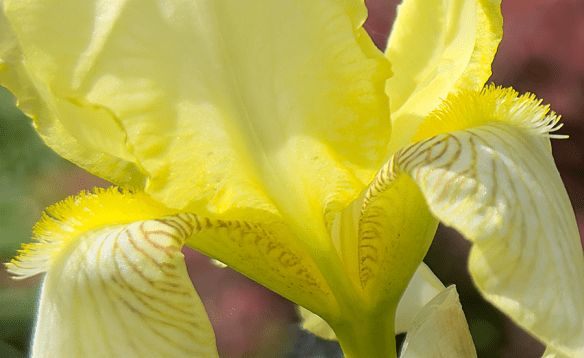
Iris season has begun, first with the dainty historical iris whose name I have forgotten but who always blooms first at the top of the hill overlooking the garden.

A closer look reveals subtle veining and her delicate yellow “beard” that gives Iris germanica its common name of bearded iris.

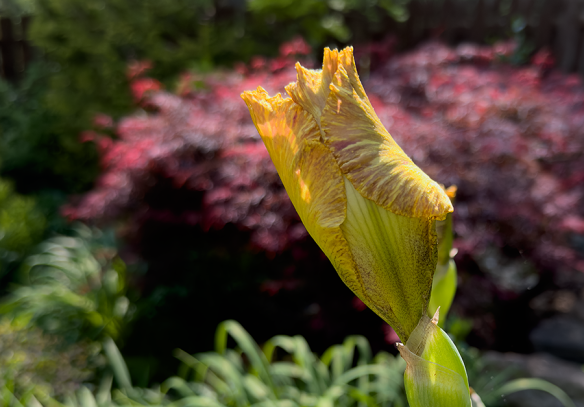
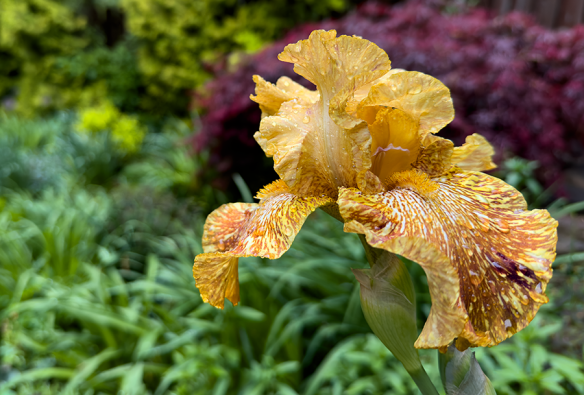
Bearded iris ‘Tiger Eyes’ looks as handsome in bud  as it does in flower.

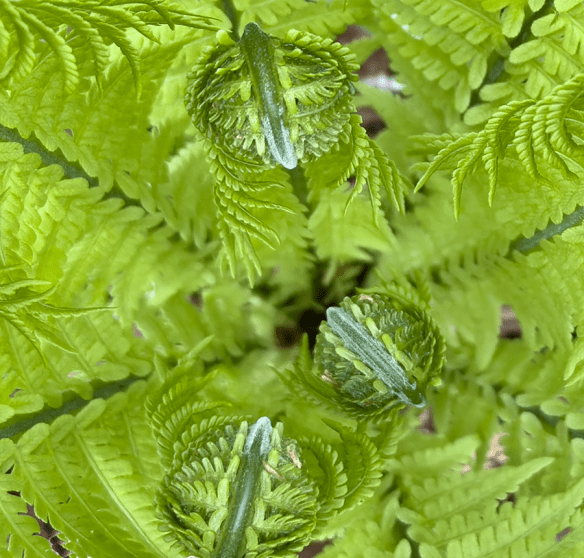
When our native ostrich ferns (Matteuccia struthiopteris) unfurled their long fronds, I took a closer look through the lens to discover all manner of shapes and patterns.

Ferns are well known as an example of fractals in nature – not only are fractals aesthetically pleasing but also thought to be stress-reducing. Looking into the heart of a fern is endlessly intriguing to me.

If you are as fascinated by plants as I am, you might be interested in the Fascination of Plants Day which was celebrated this past week on May 18. Founded by plant biologists as an annual celebration to raise awareness of the diversity, beauty and usefulness of plants, it has inspired plant-based events across the globe. (Special thanks to Steve Schwartzman of Portraits of Wildflowers for introducing me to FOPD) Whether you are a scientist or an artist or both or anything in between, enjoy and appreciate the wonderful world of plants. I wish you all a May filled to overflowing with the wild and elegant beauty of nature.

What is the good of your stars and trees, your sunrise and the wind, if they do not enter into our daily lives? ~E.M. Forster

For more on growth patterns of plants and some musical fun, see my post on the Fibonacci number series in nature and music.

All photographs and text ©2023 by Lynn Emberg Purse, All Rights Reserved, except where noted.


Embracing Winter

I prefer winter and fall, when you feel the bone structure of the landscape. Something waits beneath it; the whole story doesn’t show. ~Andrew Wyeth

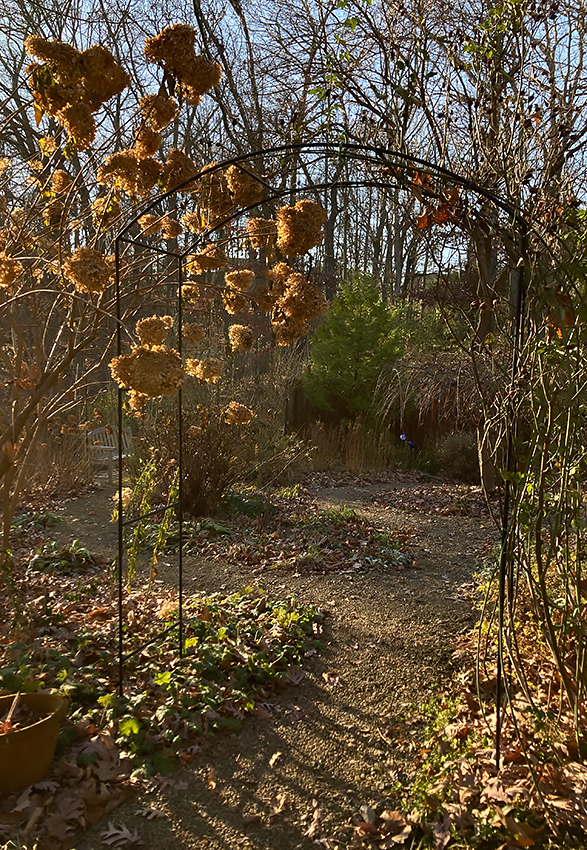
My idea of winter sports has always been a good game of chess in front of a warm fireplace. Yet there is no denying that the longer I garden, the more I appreciate the garden in winter. As the plants turn a crisp gold and then a rough brown, the eye focuses on the paths, the arbors, the bare trees and shrubs -“the bone structure of the landscape.”

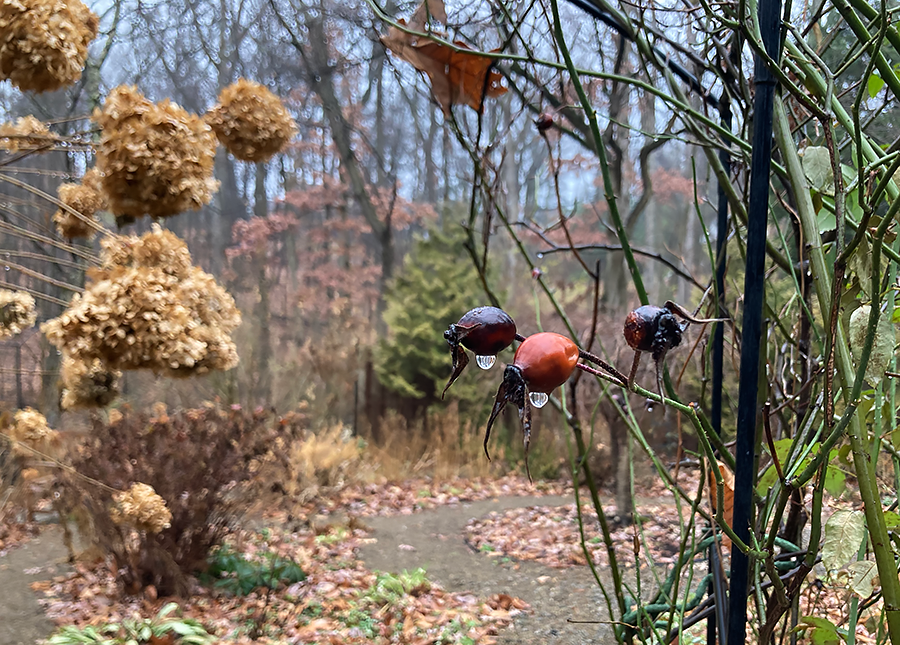
The details of plants become fascinating in a new way. The rose hips ripen and soften as the weather changes

while the cone in coneflower suddenly makes its presence known.

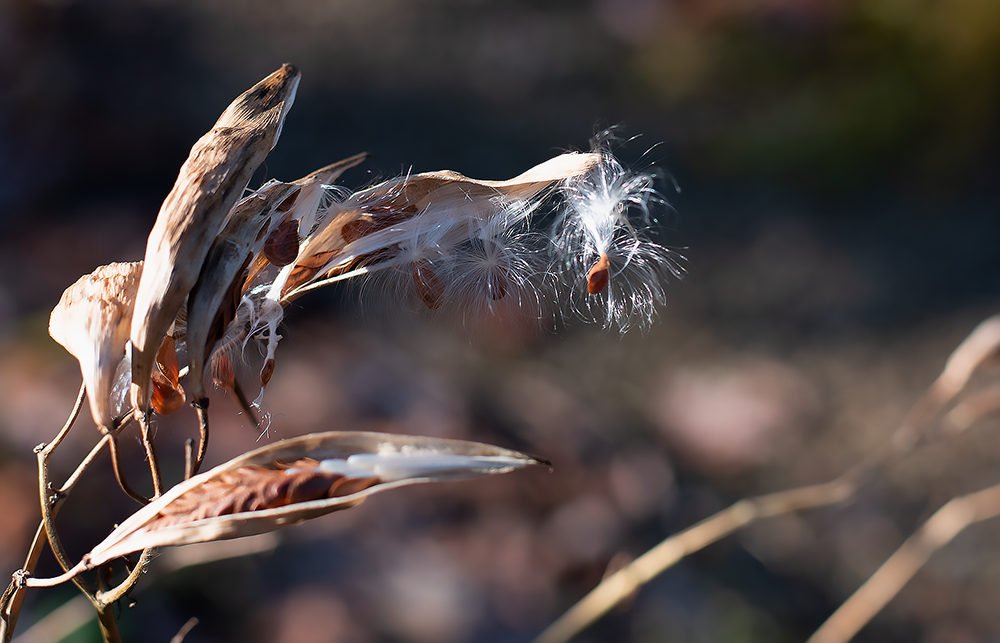
Milkweed pods open and release their seeds, carried by gossamer wings.

An early morning stroll through the garden is dramatic in the winter sunrise.

And when snow arrives, those bones suddenly don a frosty gown that transforms everything.

It is the life of the crystal, the architect of the flake, the fire of the frost, the soul of the sunbeam. This crisp winter air is full of it. ~John Burroughs

We had an especially pretty snowfall last week that I was able to capture on video – enjoy the winter wonderland.

“Snow was falling,
so much like stars
filling the dark trees
that one could easily imagine
its reason for being was nothing more
than prettiness.” 
~ Mary Oliver

A Beautiful Habitat

In the past, we have asked one thing of our gardens: that they be pretty. Now they have to support life, sequester carbon, feed pollinators and manage water. ~Doug Tallamy

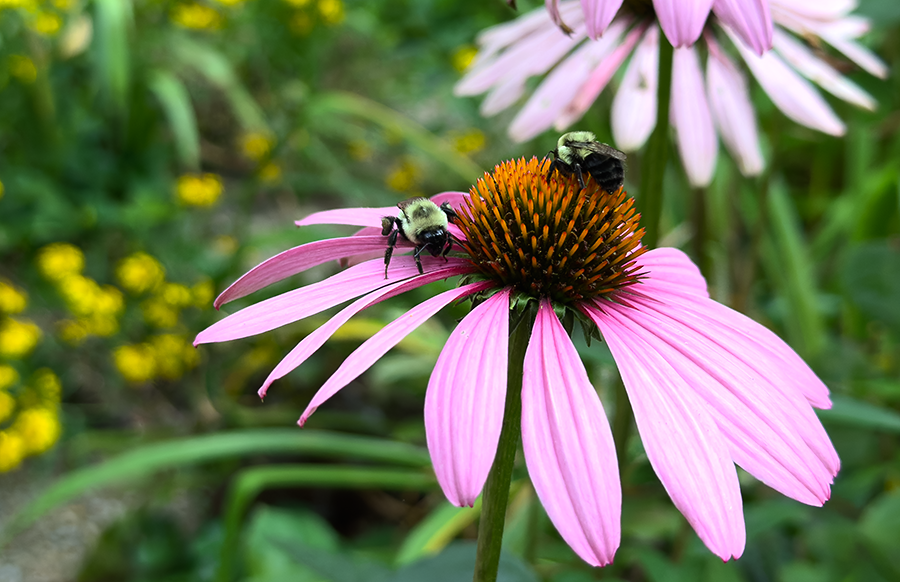
I went out in the garden during a break in the rain this weekend and the bumblebees had already emerged to feast again on Agastache ‘Black Adder’. New to the garden this year, this plant has been feeding pollinators for months as it spread its long arms and blue flowers through the blue and peach garden.

It has been a perfect summer for the garden, with plenty of rain and sun. In October, the growth is still lush in the cool temperatures and autumn rains.

After a strong pruning last year, the flower heads of panicle hydrangea ‘Limelight’ are enormous this season and a showpiece in the October garden. I’ve had my hands in the dirt (well, dirty gloves) all summer, leaving little time to write or share until now. In July, my garden was on a garden tour to benefit a local library and I taught a class in it for Phipps in September. It was the first time visitors have been here in three years. The “to do” lists for prepping the garden were long but with the help of my garden guys and my hubby, all was made ready for the hundreds of visitors. It was a joy to have people in the garden again, wandering through to the sound of Bill playing guitar on the deck. A special thanks to the volunteers from the Shaler Garden Club for their invaluable assistance and to my friend and fantastic photographer Mary Pegher for taking photos of the day (Photos below ©2022 Mary Pegher). (click any photo in the mosaic to see a full size image)

Last year was a year of rejuvenation – the garden beds were half empty by October after invasive and non-productive plants were removed. The remaining plants thrived this spring and hundreds of new plants, mostly natives for pollinators, were planted. The results made for a garden full of bees, butterflies, birds, and many other happy well-fed creatures.

The garden suggests there might be a place where we can meet nature halfway. ~Michael Pollan

The gardens outside the fence got an infusion of Monarda (bee balm), Agastache  foeniculum (anise hyssop), milkweed (Asclepias), Liatrus and Golden Alexander (Zizia aurea), much to the delight of the bumblebees and hummingbird moths. The anise hyssop continues to bloom with the goldenrod and zinnias.

I let the sun loving natives take over the south facing hillside and they attracted so many bees that my garden crew couldn’t work there on a sunny day.

The decks were stuffed with pots of salvias and Agastache rupestris which drew in the hummingbirds and bees and a poodle.

I made room in the blue and peach bed for a swath of great blue lobelia (Lobelia siphilitica) and tall phlox (Phlox paniculataamid a new set of glass globes in the blue garden.

The garden has buzzed for months with pollinators, more birds took up residence in the woods including some I’ve never seen or heard before and they fledged many babies over the season. And I learned to look more closely, listen more intently, and feel more connected to the garden than ever before.  Pixie and I spent many wonderful hours together in our little paradise.

I can think of no better form of personal involvement in the cure of the environment than that of gardening. A person who is growing a garden, if he is growing it organically, is improving a piece of the world. ~Wendell Berry

Here is a short video of the pollinators in my garden throughout this year; enjoy!  

All text, photos, and video ©2022 Lynn Emberg Purse, All Rights Reserved, except where noted.