We Must Be Mad With Joy

 “People from a planet without flowers would think we must be mad with joy the whole time to have such things about us.” ~Iris Murdoch, Irish author

Garden after rain

Garden after rain

The thunderstorms passed by quickly, leaving a few large drops of rain in their wake and some empty threats of weather violence.  We have fared far better than our neighbors in the American West, those unfortunate victims of extreme tornados who still struggle to recover their lives. Even as I grieve for them, I celebrate my own small corner of land in the foothills of western Pennsylvania.

Tonight, the garden in twilight is luxuriating in its richness of leaf and flower and I cannot end my stroll. It is bewitching. Leaves of every shape and form spring out and blend – all of the plants in my garden touch and jostle each other – no Puritan “touch me not” unplanted spaces here! Oh, this is an excess of green and growing that sings a great chorus in the dusk of a warm early summer day.  Yes, many plants bloom in May – the insignia of iris, the globes of allium, the stars of clematis, the blooms of columbine, lilac and others.  But May is feckless in its headlong plunge into green growth from the carpet beneath one’s feet to the canopy among the trees. May is fragrant and headstrong, the vibrant green path leading and spilling us into June.

Lamb's ear rising up to bloom

Lamb’s ear rising up to bloom

The silver lamb’s ear have risen to a foot high impossibility in the past few days, ready to bloom and nourish the bees –their bright foliage outlines the beds in the garden. The swords of daylily leaves create circular swirls of green blades, predicting their July bloom – a  promise of color and form to come. Beauty bush and lilac burst with thousands of tiny flowers, mounds of color and scent that greet the morning and bless the warmth of the evening, alive with the buzzing of bees seeking nectar. And so it goes. May is so full of voluptuous beauty and scented flowers that it sends the senses reeling with the experience of it, making us mad with joy.

Wild black cherry (Prunus serotina)

Wild black cherry (Prunus serotina)

The surrounding woods are filled with the blooms of native black cherry, dangling white racemes that scent the air with their sweetness. Every day, a dozen new flowers awake and open and bring a new shape and scent to the bounty of the garden. I can hardly keep up; I mulch and trim and plant seedlings but it is as if I were on the end of the “crack the whip” game – I can only hold on tight and try my best to serve the beauty of the garden as I am flung and swung through its spurt of green growth and scented flowering. Here are a few images captured that may share some small part of this beauty; click on the first image to open the gallery. (All photographs ©2013 Lynn Emberg Purse)

It is a golden maxim to cultivate the garden for the nose, and the eyes will take care of themselves.  ~Robert Louis Stevenson

To see more photos and read more about the fragrant wild black cherry that is native to the eastern US, see Bernadette’s post Wild Black Cherry.

The Shape of Things

Never say there is nothing beautiful in the world anymore. There is always something to make you wonder in the shape of a tree, the trembling of a leaf.  ~Albert Schweitzer

Each day brings more plants into leaf and flower. As I wander through the woods and gardens each morning, I realize that it wasn’t just color that I missed in this long winter past. It was the amazing cornucopia of shape and form that emerges from the trees and shrubs, the miracle of plants springing up from the bare earth in fresh new clothes. The early morning light gets caught in the shape and trembling of leaf and flower and I get lost in the looking.  Enjoy.

What a Beautiful Morning!

Oh what a beautiful morning,
Oh what a beautiful day,
I’ve got a wonderful feeling,
Everything’s going my way.  ~lyrics by Oscar Hammerstein II,  from “Oklahoma!”

I’ve spent the early hours of the past few mornings in the garden, with the moments between weeding and planting spent enjoying the sparkle of early morning light. The woods are showing a soft green blush of unfurling leaves as the garden begins its April bloom cycle. Yesterday morning a golden shimmer of light reflected on dewy flowers; this morning the almost full moon still hung in the morning sky while the birds sang their dawn chorus. I couldn’t help myself – I broke into song with them. “Oh What a Beautiful Morning!” is a personal favorite of mine and it seemed so descriptive of the moment. “All the sounds of the earth are like music” – who knew Oscar was so poetic?

Here are a few images from the late April garden. Enjoy!

All photos ©2013 by Lynn Emberg Purse, All RIghts Reserved

I Will Be the Gladdest Thing

I will be the gladdest thing under the sun! I will touch a hundred flowers and not pick one. ~Edna St. Vincent Millay

pink foxglovesI touched more than a hundred flowers last weekend, though with my eyes, and I didn’t pick one, except perhaps with my camera. Going to a large flower show in late winter is always a delight for winter weary senses.  Never mind the artificiality of plants forced into early growth and assembled in great halls to mimic a garden – there they are, to be seen and smelled and enjoyed.  I spent a day at the famed Philadelphia Flower Show and my senses are still reeling. It took the better part of the day to see most of the exhibit – this year’s theme was “Brilliant!” – an ode to British gardening style. Any large flower show, in the U.S. at least, is an opportunity for the green industry to strut their artistic stuff – that includes garden designers, florists, plant specialists, and various other vendors. Walk along with me through the show to sample a few of the gardens and flowers.

Living on a wooded lot in which I am trying to expand the native habitat, I was drawn to the naturalistic garden displays. I looked for the treetops in this great hall, which led me to various woodland scenes, complete with small buildings, shade plantings, and open areas filled with flowers. I found myself visiting these displays more than once, especially one that I call the “Greenhouse Garden” created by Hunter Hayes Landscape Design, a specialist in ecological designs.  Frankly, I wanted to move into this place and never leave. (Click on any photo to trigger the photo gallery viewer, click on X to close gallery)

The British garden theme “Brilliant!” was carried out in many exhibits, both in gardens and floral displays. It was interesting to see how Philadelphia area companies interpreted the English garden and floral look.  “The Scorer’s Garden” by J. Downend Landscaping featured a pink and blue cottage style garden full of roses, snapdragons and salvias. “Hidcote Holiday” was a large garden construction by Stoney Bank Nurseries with many lovely components, culminating in a gated garden view that had visitors lining up to take their photos. The floral displays were no less extravagant.  My favorite was “A Proper Hodgepodge” by Robertson’s Flowers that featured “stylistically iconic time periods” ranging from a 1960’s Mod Gala to a lavish Medieval Feast. (visit their blog to see more photos of this spectacular exhibit)

Sometimes it was just about the flowers. The Raymond Evison Clematis display featured his spectacular clematis – I put “Parisienne” on my “must get” list. The Netherlands American Business Association featured Dutch bulbs in colorful combinations and throughout the show, home growers competed for best displays of forced bulbs, including lovely groups of colorful daffodils.

Not only were visitors dazzled by the colors and scents, they were educated as well. Organic Mechanics potting soil display cleverly touted their product while educating consumers on eco-sensitive potting mixtures and the beauty of growing herbs and veggies. The Pennsylvania Horticulture Society featured a spectacular wall of brassicas anchored by a clever wheelbarrow sculpture on one side and a hanging garden of glass birdfeeders and cottage garden flowers on the other. Many schools contributed attractive and educational displays; the Williamson Free School of Mechanical Trades featured a vegetable kitchen garden based on 18th Century Horticulture practices in America.

I hope you enjoyed visiting the Philadelphia Flower Show 2013 with me.  Think spring!

Second Wind

Second wind – restored energy or strength; renewed ability to continue in an effort ~ The Free Online Dictionary

The rains came last night, the wind blew them in. When I went out at midnight with Angel, the air was still warm, pale clouds were threaded across the sky, and the insect chorus was heartily singing. I fell asleep by an open window, lulled by the unexpected sound of summer in October. But later I woke to the sound of the wind blowing the leaves and bowing the trees for hours, finally bringing a soft steady rain punctuated by acorns plunging from the trees onto the roof. It was a night to wake up often and listen, then fall asleep again with the wild sounds of the earth all around.
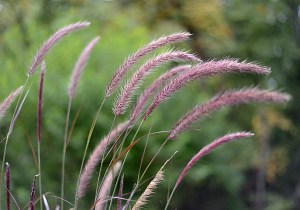
The garden lingers into fall, having gotten its second wind after the heat of summer. MIld days, alternating between warm slanted sunshine and entire days of rain and mist, have fostered a last round of bloom.  Even as copper oak and golden ash leaves drift into the garden beds, the bright faces of flowers blossom everywhere.  The purple asters and golden mums of the season have appeared right on cue, but roses, salvias and coreopsis are making a surprise grand finale appearance, along with the annual nicotiana and ageratum. The deep warm foliage of coleus and ornamental sweet potatoes have refreshed themselves after the scorching heat of August; their vibrant leaves trail and climb through the garden in a final burst of glory. Here and there a summer clematis flower pops up, an unexpected treat. The tall grasses are at their height of flowering, wands swaying in the slightest breeze, moving in tandem with the clouds overhead.

Bio-acoustician Bernie Krause coined the term geophony to describe the sounds of the rain, wind, thunder, surf – the music of the geosphere, as different from biophony, the sounds of the biosphere. Although the raucous arguments of crows and the chirping calls of chipmonks will continue year round, I can hear the shift from the biophony chorus to the predominance of the geophony orchestra. As the northern hemisphere swings into late autumn, the music of wind and weather is gradually taking the place of the creature choir that is the hallmark of spring and summer.

Here are some photos of the fall garden in its second wind. (click on any photo to enlarge it; that will take you into the gallery viewer – if you are on a mobile device, scroll up to see it)
Want to know more about soundscape ecology?
Whisper of the Wild – an article in the NY Times Magazine of sound ecologists recording the geophony of winter in Alaska
Wild Music – a traveling exhibition about the sounds and songs of life, including the work of many musicians and composers