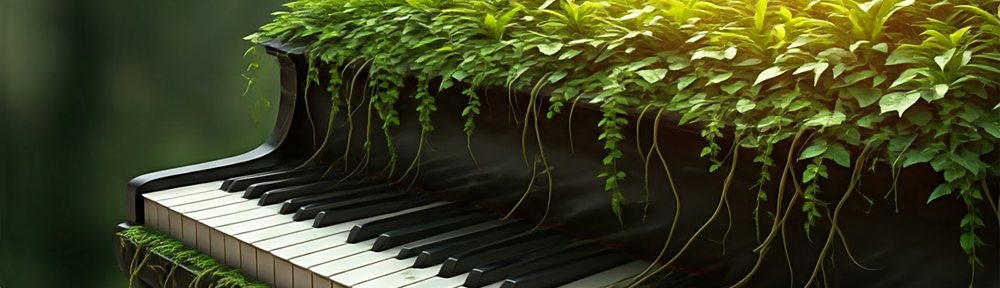
Waters of March (Águas de Março)

And the river bank talks of the waters of March
It’s the promise of life, it’s the joy in your heart – from “Waters of March” by Antonio Carlos Jobim

The Waters of March (Águas de Março ), written by Antonio Carlos Jobim,  reflects the end of summer, which is March in Brazil.  For those of us in the Northern Hemisphere, it suggests the beginning of spring, “the promise of life in your heart”.

March is here and is it full of the promise of life. As I bend again and again to weed and clear the detritus of winter and uncover the emerging blooms and greening leaves, I hear in my mind the lovely repetitive melody of this sensuous and philosophical song by Jobim, the composer and musician who made Brazilian music accessible to the rest of the planet.

The Waters of March was originally intended to list the passages and events of life that flow and ebb and culminate in the waters of March, a stormy and wet time at the end of summer in the southern hemisphere of Brazil.  In the northern hemisphere, March is also stormy and wet but also the beginning rather than the end of the growing season. As the rain and storms bring us green leaves, bird song, and early blooms, we can consider the beauty of the song and the reality of nature’s astonishing gifts of blossom and promise.  Here are a few images of new life in my garden this week, a stream of life in the waters of March.

“It’s the promise of life in your heart”

The original song sung by Brazilian singer Elis Regina and Jobim, with English subtitles, slow to load but worth watching.

A video of a recording session with Regina and Jobim in an Argentian production that is evidence of pure joy and utter musical communication.

Al Jarreau and Oleta Adams in a very lush and sexy version of Waters of March.

The written lyrics of Waters of March – Portugeuse and English

All images ©2012 Lynn Emberg Purse, All Rights Reserved
Planting a Seed

Aside from the garden of Eden, man’s great temptation took place when he first perceived his seed catalog. Henry Wadsworth Longfellow

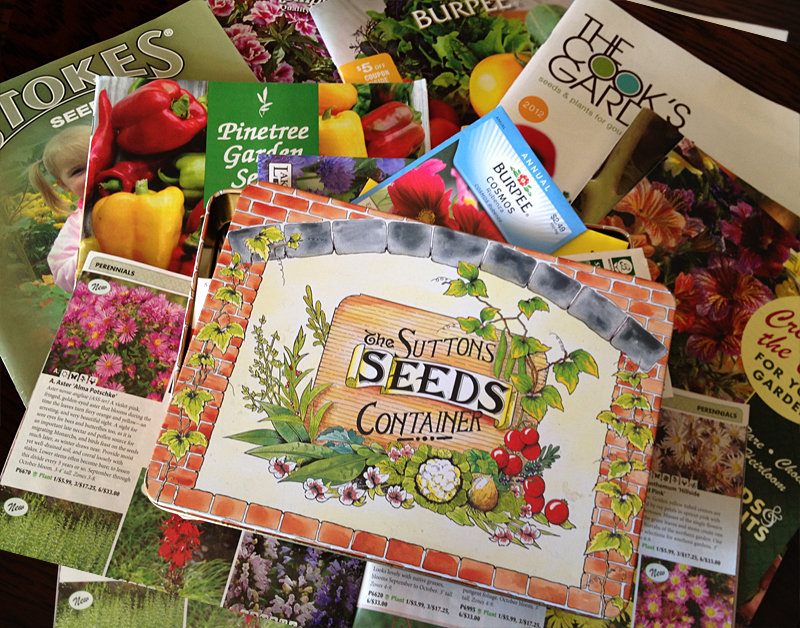
image of seed catalogsIt is the time of year when seed catalogs take on a life of their own, slithering off the coffee table, piling near a favorite chair, and populating the bedside. Earmarked and rife with notes, circled photos, and exclamatory punctuation, the catalogs bear witness to the pent up longing for color and new life that is part of every gardener’s spring fever. Some of the seeds are already here, along with a supply of pots, flats, and bagged soil; others are still to be ordered. Every year, as I begin the late winter planting, I consider the profound act of planting a seed.

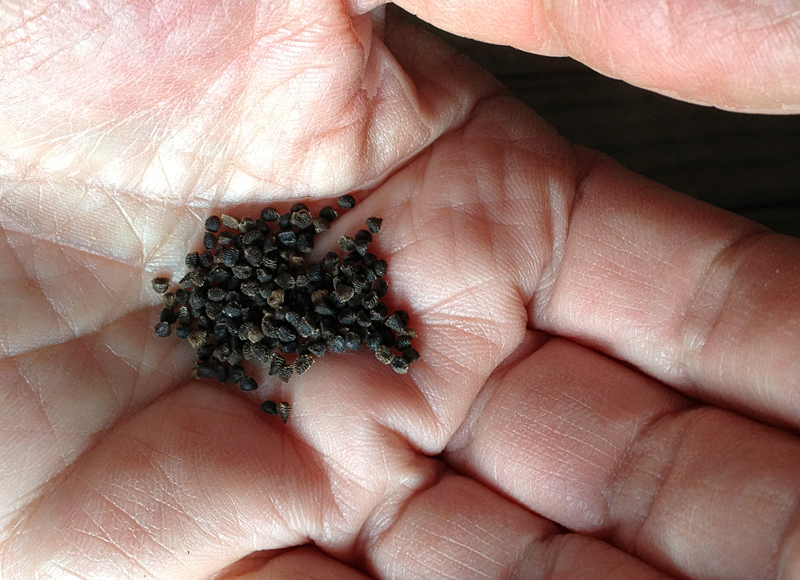
image of larkspur seeds in handAlthough we may live in a high tech world estranged from our agricultural beginnings, our language continues to allude to the power of a tiny seed to start life, to change the world. Seeds of change, seeds of destruction, ideas that germinate, going to seed – the language of seeds is endless. While Continue reading

On Being Versatile

Charlotte the spider told Wilbur “I’m versatile.” Wilbur asked “Does “versatile” mean “full of eggs”?” Charlotte replied “No, it means I can change with ease from one thing to another.” Adapted from Charlotte’s Web by E. B. White

Once again, I have been honored with another blogging award, The Versatile Blogger, from poet AZ/catcherofstars of Verse Not Prose and photographer Kerry of Lightscapes Nature Photography. I accept it with humility and grace, knowing that it is coming from two WONDERFUL bloggers and I apologize for the delayed response. Kerry particularly had insightful thoughts on the practice of giving and receiving blogging awards, and I refer you back to his post with “Ditto, what he said!” With the award comes some obligations: post the image of the award; acknowledge the one(s) who nominated you; share 7 facts about yourself; and nominate others in turn and inform them of their nomination. The numbers vary on this last one, so I take the path of moderation in all things.

However, I will preface this post by the admission that I am of two minds about the award, but not from the obligations incurred. No, for me it is all about the perception of being versatile in the world of creative arts.

Tools are often sold on the basis of their versatility, whether it is a Continue reading

Autumn Minimalism: the Constancy of Change

The garden now reminds me of a symphony orchestra tuning for a concert. Fall has not quite arrived in its full power and majesty, but the time will soon arrive for its long unfolding. Allen Lacy, “The Garden in Autumn”

Minimalism has been on my mind all week. My student ensemble tackled Terry Riley‘s “In C” on Wednesday, the next day a composition student declared his intention to write a piece in the “minimalist style” and I found myself explaining the intersection of multiple rhythmic patterns and the sense of constant motion that emerges in this approach. Meanwhile, I’m preparing for a visit from friend and minimalist composer David Borden as well as another performance of my orchestral piece, Sketches of America, which includes minimalist elements. So, perhaps it is not surprising that walking through the garden this morning, coffee firmly in hand, I noticed the constant motion of the garden as well.

The floral fireworks of July are a distant memory; September is all about motion. Tall slender stems of late blooming annuals and ornamental grasses lend the look of a meadow in the garden beds, moving in the lightest breeze and shimmering in the sunlight. Bees and butterflies, hungry for a late season feast before winter, bow and bob from flower to flower, layering the garden with another repetition of rhythm. Cicadas haven’t ceased their buzzing ostinato from the night before; the drone is punctuated by a pair of cardinals warning of a wandering cat; once danger is past, melodious bird song resumes. A hummingbird swoops by me, its wings sounding like the roll of a snare drum; we’re both surprised by the encounter, and he cheeps and flies away in search of a more private feeding ground.

I meander to the upper deck, where I can see the garden in its entirety while gently rocking in a chair, my own contribution to the motion of the garden. Even twenty feet above ground, bees and wasps find the plumes of Agastache ‘Apricot Sprite’ that I planted in pots on the deck; they hustle in and out of the long wands of flowers, triggering a pungent scent of licorice in the warm humid air. I’m amused by my feelings of peace and stillness in the garden, when in actuality it is a place constantly in flux, moving and changing in both sight and sound. Minimalistic music, with its floating patterns hiding surprise within repetition, has always seemed to me to be both constantly moving and yet utterly still at the same time. This morning,the garden seems to embody that same quality, a constancy of change.

All text and video in “Autumn MInimalism: the Constancy of Change” ©2011 Lynn Emberg Purse, All Rights Reserved
The Sound of the August Garden

It is early evening, and there is just enough light to see as I meander through the garden, a last visit before dark.  Angel Eyes and I wander about, pausing to listen to the insect orchestra from various vantage points. A steady two note drone provides the underlying ostinato, while pointillistic voices of cicadas and crickets spring from every direction in polite succession.  It may be too cool this evening for the tree frog chorus – on a warm night, they are the antiphonal brass and rat-a-tat percussion of this natural orchestra, but tonight it seems to be strings and woodwinds.

This slideshow requires JavaScript.

I love living surrounded by trees – my attempts to compose surround sound pieces seem feeble when compared to the robust chorus of our woodlands in August.  I really should be in my studio tonight, working on the fourth movement of a large work called “The Four Elements” – fire, or perhaps Lux Aeterna.  But it is difficult to tear myself away from the amazing concert in the garden.  So . . .  I pour myself a modest glass of wine and surrender to nature’s concert once again – Angel and I go out onto the deck for a final listening session.

The late August garden is a tall and blowsy affair.  The plants that survived July’s burning sun and dry soil have caught their second wind and are encouraged into fresh growth by the cooler nights and the rainy remnants of the hurricane season.  Hummingbirds and butterflies flock to their favorite flowers, building up energy for their imminent migrations.  Everything is tall – the shrubs have grown extra arms that reach everywhere, the grasses have sprouted tall wands that catch the wind, and everything seems to flow and spill and tumble in a rush to be seen and tasted before summer ends.

Now it is almost dark – the brash golds and burgundies of Rudbeckia and Zinnia are now only rendered as silhouettes in the fading light.  It is chilly enough to want a sweater and a cup of tea – but it is hard to go inside when the fading light still reveals layer upon layer of texture, shape, movement . . . it is difficult to leave, to walk away from the enchantment of Mother Earth’s humble orchestra.  Tonight, the windows will remain open to the sound of the August garden.

Listen to the sounds of the cicadas and tree frogs.

Text and audio of “The Sound of the August Garden” ©2011 Lynn Emberg Purse, All Rights Reserved