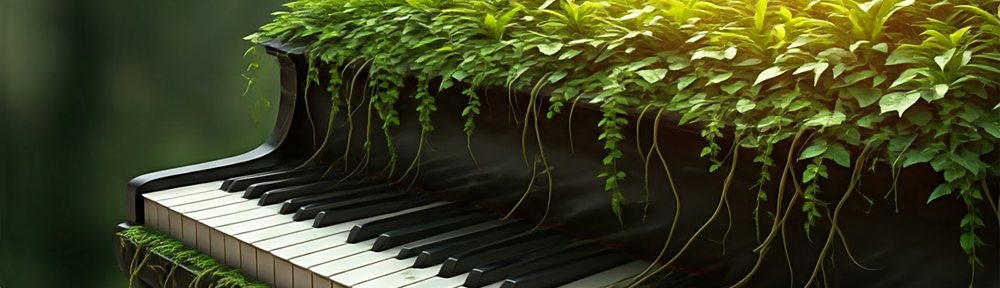
There is always music amongst the trees in the garden, but our hearts must be very quiet to hear it. ~Minnie Aumonier
It was only last year that I created my woodland garden yet it is the first place where Pixie and I walk at dawn . . . and the last place where we linger at dusk.
  The quiet green heart of it draws us in many times a day to meander and explore. The cool shade of the woods has become a refreshing place to escape the intense heat of the sun at midday.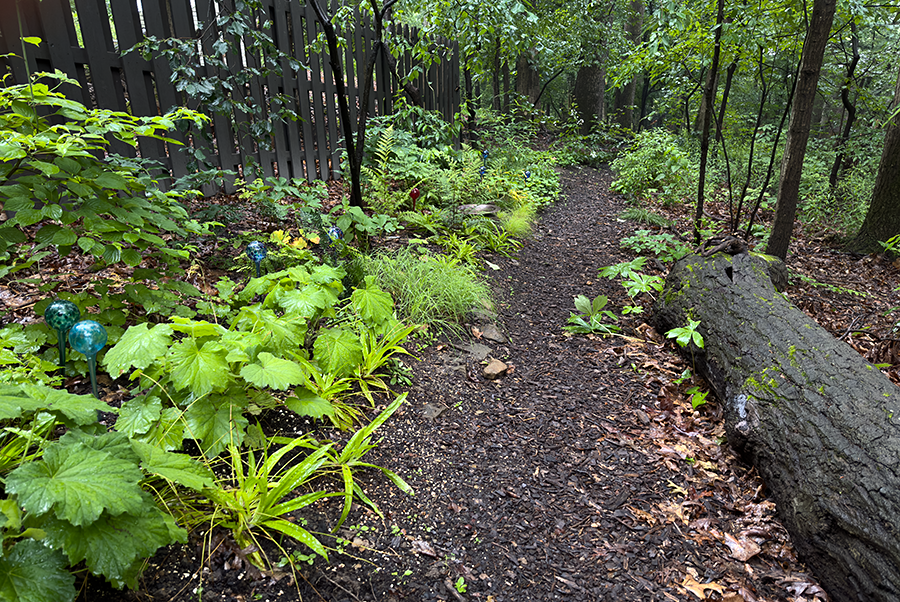
There are so many details to notice, like the red croziers of a lady fern
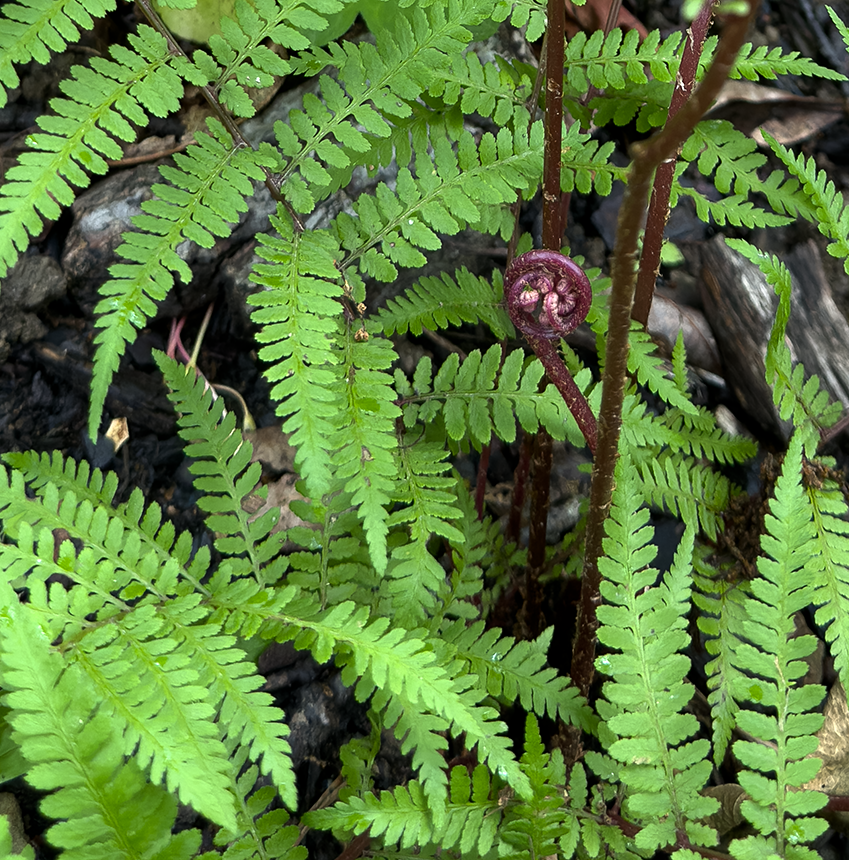
and the green and black pinwheels of the maidenhair ferns.
Weeks of heavy rains and hot weather triggered lush growth in this young garden, making it look mature beyond its years.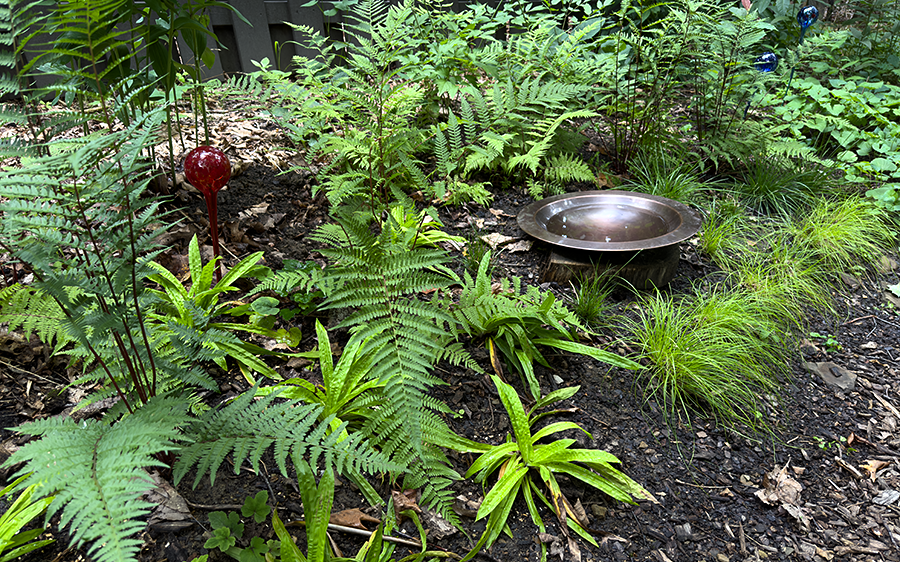
A sturdy copper birdbath added in June has become a centerpiece to the ferns and sedges that flow around it while its water reflects the trees above. All of the plants in this woodland garden are native to our southwest Pennsylvania area, giving me a challenge and an opportunity to play with form, texture and multiple shades of green in an eco-friendly setting.
We moved here over twenty years ago because of the tall trees that surrounded the house – creating a garden at their feet has made them even more treasured. This short video is an effort to capture the atmosphere and beauty that this little woodland garden offers.
I wish you a peaceful place in which to relax and reflect in quiet moments, and if you are a gardener, encouragement to plant a tree and play in its shade.
Nature’s peace will flow into you as sunshine flows into trees. The winds will blow their own freshness into you, and the storms their energy, while cares will drop off like autumn leaves. ~John Muir
All text, images, and videos ©2025 Lynn Purse, All Rights Reserved except where noted.
 We’re at the end of “Pollinator Week” here in the U.S., an opportunity to draw attention to the plants and practices that build habitats for our pollinator friends. For the past four years, I have systematically eliminated groups of plants that have either been rated as invasive for our area or simply don’t provide any value to pollinators or wildlife in general. Replacing them with natives has resulted in a massive shift in the number and variety of birds, butterflies, and other pollinators that now reside here. The dawn chorus is astounding when Pixie and I step into the garden each morning – take a listen for yourself!


 composerinthegarden