The August garden – imperfectly perfect

The garden in late summer is an odd contradiction of flowers swarmed by feasting pollinators Bumblebees on Echinaceaand plants, having fulfilled their seasonal life cycle, now tipping into senescence. Dead leaf caught in grass inflorescence

There is no stopping this process – it is life in the garden and the world, the dynamic of change and imperfection.

One of the basic rules of the universe is that nothing is perfect. Perfection simply doesn’t exist. . . Without imperfection, neither you nor I would exist.
~ Stephen Hawking

Without the cycle of organic death and decay, the moss and mushrooms would have no place to grow and thrive.
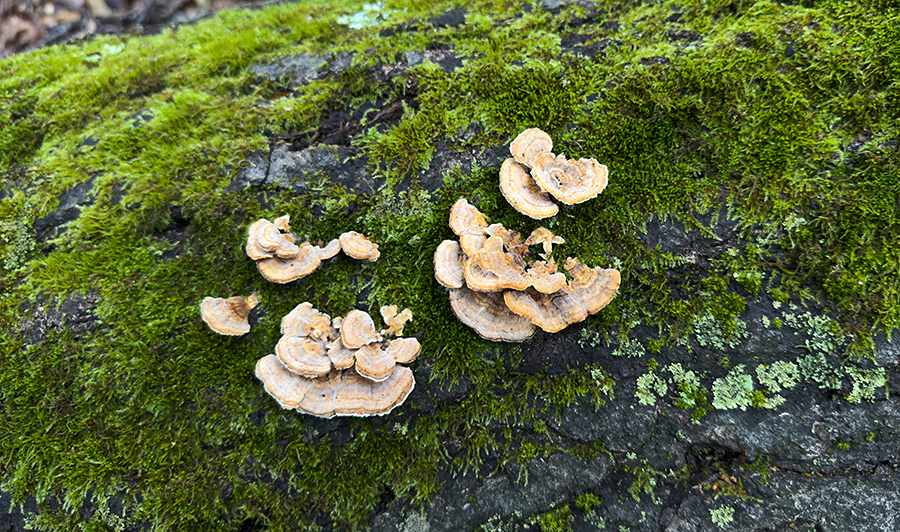
Mushrooms growing on a mossy log

Tucked in the brown stems of a native iris that bloomed in May, a spider web is strung with drops of rain like a miniature Indra’s Net in the garden.

Long gone is the youthful beauty of June and July, when everything was fresh and colorful. But every day I treasure the richness and wildness of late summer, the garden overflowing with abundance.
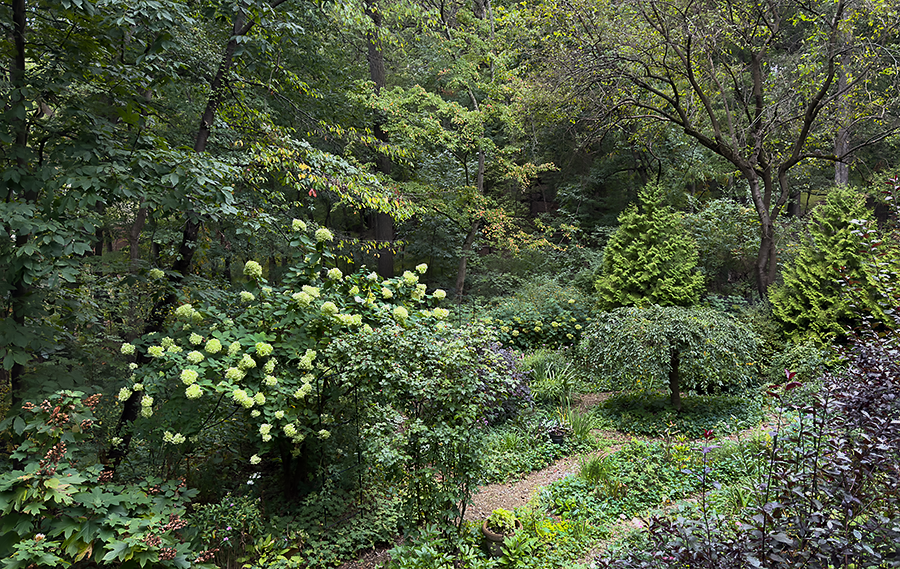
The lines of the paths and arches are now blurred by plants freely growing past their boundaries.

Late blooming perennials like the hardy begonia promise fresh new flowers,Hardy begonia buds

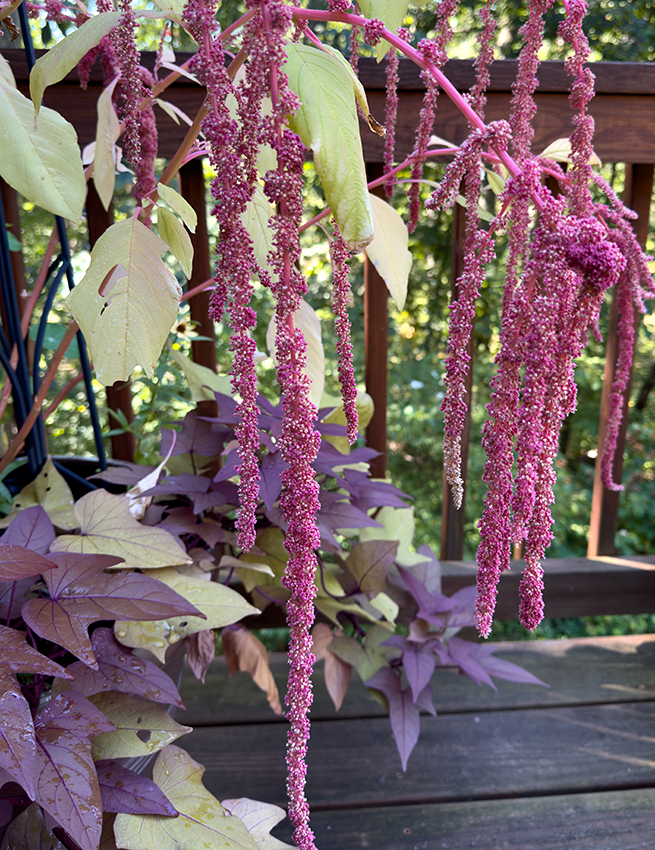
while an annual amaranth drapes to the ground with a full season’s worth of bloom. Amaranth flowers
Late summer, more than any other time in the year, contains that full circle of seasons, a crescendo of life well-lived, the ebb and flow of a garden in all its imperfectly perfect beauty. Enjoy this stroll through the garden buzzing with life in August.

I wish you joy in the inherent wildness underlying this season of abundance, growth, and change.

Second Wind

Second wind – restored energy or strength; renewed ability to continue in an effort ~ The Free Online Dictionary

The rains came last night, the wind blew them in. When I went out at midnight with Angel, the air was still warm, pale clouds were threaded across the sky, and the insect chorus was heartily singing. I fell asleep by an open window, lulled by the unexpected sound of summer in October. But later I woke to the sound of the wind blowing the leaves and bowing the trees for hours, finally bringing a soft steady rain punctuated by acorns plunging from the trees onto the roof. It was a night to wake up often and listen, then fall asleep again with the wild sounds of the earth all around.

The garden lingers into fall, having gotten its second wind after the heat of summer. MIld days, alternating between warm slanted sunshine and entire days of rain and mist, have fostered a last round of bloom.  Even as copper oak and golden ash leaves drift into the garden beds, the bright faces of flowers blossom everywhere.  The purple asters and golden mums of the season have appeared right on cue, but roses, salvias and coreopsis are making a surprise grand finale appearance, along with the annual nicotiana and ageratum. The deep warm foliage of coleus and ornamental sweet potatoes have refreshed themselves after the scorching heat of August; their vibrant leaves trail and climb through the garden in a final burst of glory. Here and there a summer clematis flower pops up, an unexpected treat. The tall grasses are at their height of flowering, wands swaying in the slightest breeze, moving in tandem with the clouds overhead.

Bio-acoustician Bernie Krause coined the term geophony to describe the sounds of the rain, wind, thunder, surf – the music of the geosphere, as different from biophony, the sounds of the biosphere. Although the raucous arguments of crows and the chirping calls of chipmonks will continue year round, I can hear the shift from the biophony chorus to the predominance of the geophony orchestra. As the northern hemisphere swings into late autumn, the music of wind and weather is gradually taking the place of the creature choir that is the hallmark of spring and summer.

Here are some photos of the fall garden in its second wind. (click on any photo to enlarge it; that will take you into the gallery viewer – if you are on a mobile device, scroll up to see it)
Want to know more about soundscape ecology?
Whisper of the Wild – an article in the NY Times Magazine of sound ecologists recording the geophony of winter in Alaska
Wild Music – a traveling exhibition about the sounds and songs of life, including the work of many musicians and composers