 We’re at the end of “Pollinator Week” here in the U.S., an opportunity to draw attention to the plants and practices that build habitats for our pollinator friends. For the past four years, I have systematically eliminated groups of plants that have either been rated as invasive for our area or simply don’t provide any value to pollinators or wildlife in general. Replacing them with natives has resulted in a massive shift in the number and variety of birds, butterflies, and other pollinators that now reside here. The dawn chorus is astounding when Pixie and I step into the garden each morning – take a listen for yourself!
The circle garden is overflowing with lush growth after week-long periods of rain. 
I’ve been experimenting with what native plants do well in different parts of the garden – one delightful surprise has been foxglove beardtongue, the graceful Penstemon digitalis native to our area. It grows equally well in rich sunny areas and dry woodland beds, stands up to the rain and resists deer browsing while its white blossoms on tall wands feed small winged pollinators. It’s easy to grow from seed so it’s time to add another dozen plants to every part of the garden! 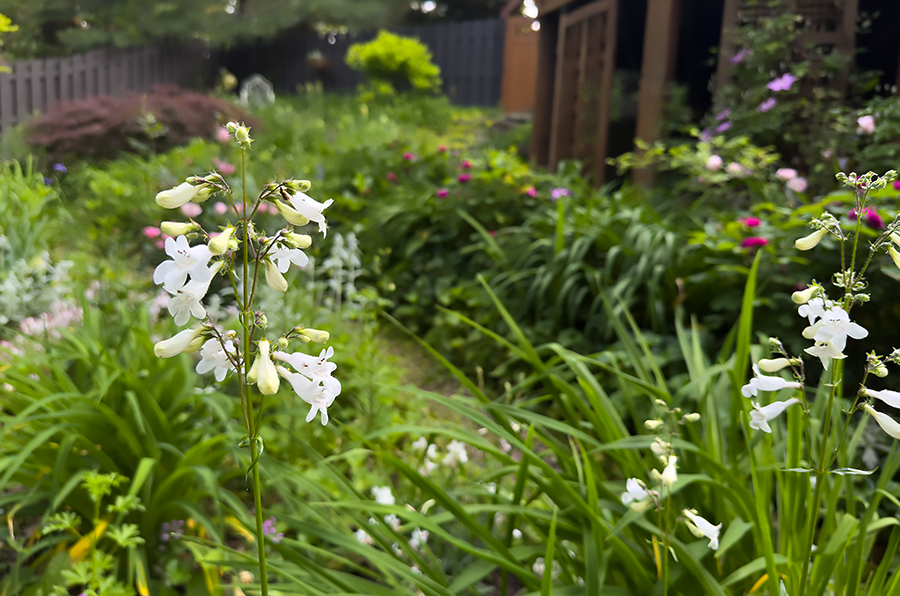
Another happy native plant is Zizia aurea, better known as Golden Alexander. It blooms with the peonies and has handsome foliage all season long but importantly, is the host plant for black swallowtail butterflies. I’ve been letting it self seed so that I will have more to spread about the garden. 
The woodland garden I began last year has begun to fill out and actually look like a garden, thanks to the almost constant rain. 
Filled only with native plants, it has been a fun challenge to play with the textures and shapes of woodland denizens. A new copper birdbath provides a clean and dependable source of drinking water for wildlife while adding a little shine to the area. 
Sometimes my heart hurts a little when I watch online videos of gardeners who continue to promote plants that are damaging to the environment because, in addition to adding to a problem, it encourages others to do the same without thought for the consequences. Creating a beautiful garden that is also a healthy habitat does not have to be mutually exclusive.
So this year, I’ve decided to shine a light on beautiful garden plants that also support pollinator life in the hopes of encouraging others to do the same. Today’s video features five of my favorite native plants, with more videos to come. I continue to learn and refine my plant choices as I reach for a 70% native plant balance, the “magic number” to creating a viable habitat. Enjoy!
If you have a garden, I hope you will consider adding a “native to your area” plant or three to provide food for our precious pollinators.
 composerinthegarden