Unknown's avatar

About composerinthegarden

A composer by vocation, a gardener by avocation. My garden and my life as a composer are deeply intertwined - the yin and yang of my creative life. . .

Sketches of America

Last night, the Washington Symphony Orchestra performed “Sketches of America” as part of their “Picture This” concert. Under the creative and enthusiastic guidance of Music Director Yugo Ikach, the WSO is a community orchestra, which means that the majority of the musicians are volunteers and participate for the love of performing music.  “Sketches” was originally written for and performed by the Duquesne University Symphony Orchestra featuring professional soloists, including reknowned jazz trumpeter Sean Jones.  I wanted to hear how the WSO would perform the piece, with very little input from me other than the written score.  Would it work?

The title “Sketches of America” was a play on Miles Davis’ “Sketches of Spain”  which itself was a jazz interpretation of Rodriguez’s Adagio movement of the “Concierto de Aranjuez.” I was commissioned to create an orchestral piece that would include a section for jazz improvisation by the soloists, a somewhat daunting task in orchestral writing.  My own goals were more complex – I wanted to draw on American musical traditions as well as musically reflect on my love of the American landscape.  The strains of “America the Beautiful” kept running through my head as I was composing, and a few fragments of the melody crept into the piece as well.

The first section of the piece, “the painted desert” draws on minimalism, a uniquely American approach to “concert music” typified by composers like Terry Riley, Philip Glass, and John Adams. Inspired by a long November drive through the deserts of Arizona, a panorama of grey skies, yellow flowering shrubs, and tumbleweed, I remember a vast quiet world marked by the rhythmic turn of the car wheels. (The full version of “The Painted Desert” was used in my “Autumn Minimalism” post, in the video soundtrack)

That repeating rhythm segues into the syncopation of “a joyful blues” – another American musical tradition in the form of jazz and blues. Not content to write the traditional twelve bar blues in 4/4, I constructed a thirteen bar blues in 5/8 meter over which the solo trumpet and trombone improvise to the fast rhythms of  the pizzicato strings. Those seemingly odd numbers are part of the Fibonacci number sequence, something that occurs throughout the natural world in the form of flowers, seashells, and trees

“Sketches” closes with a chorale style section based on “Clay”, a song that I wrote in response to my efforts to dig and amend the clay in my garden. One of the lyrics, “. . . the solid ground beneath our feet” became a metaphor for the natural beauty of our vast country and the challenge of keeping it “America the beautiful.”

The WSO performance?  Wonderful. The piece worked, the orchestra sounded great, the soloists rose to the challenge, and the effect was just as I had intended.  That moment of hushed silence in the hall at the close of the piece, the sign that the audience was listening and involved, seemed more important than the applause that followed. Those of you who are composers know that this does not always happen!  As my husband and colleague remarked later, “the piece played itself.”  It was an unexpectedly moving experience and I was touched to the heart, and at that moment, I was very glad indeed to be a composer.

(The recordings above were taken from the premier of “Sketches of America” performed by Sean Jones, trumpet, and Ed Kocher, trombone, with the Duquesne University Symphony Orchestra under the direction of Sidney Harth.)

All music and text in “Sketches of America” ©2011 Lynn Emberg Purse, All Rights Reserved

Still Point

. . . just as a violin string’s different vibrations produce different notes, energy strings’ unique vibration patterns correspond to different subatomic particles.  If this picture is correct, all of physics can be summarized as the harmonies of tiny vibrating strings, chemistry as the melodies of interacting strings, and the universe as a symphony of all strings resonating distinctly. Michio Kaku, Professor of Theoretical Physics, on String Theory

Physics of sound. Physics of the universe. Both attempt to describe and define how the world moves and vibrates. Molecules of air bump into each other, creating patterns and waves of sound, very similar to the way that water moves.  When I was asked to write a piece to celebrate the dedication of a new performance space and audio recording suite in our music school, it seemed appropriate to focus on how sound works and how musicians gather together to “play” with sound, whether on the stage or in the studio.

But this piece was also intended to commemorate the son of the benefactor, as well as the mother for whom the Music School was named.  Tragically, the grandmother and grandson had both died relatively young and had never met.  The school and this new space was the connection between them, a musical connection across time and space. It struck me that the physics of sound could be extended into the quantum and string physics theories that I had been reading and studying for a number of years.  There was a congruency of language used to describe our universe in motion, elegant and apt.  So, through the lens of a musician who works daily with the physics of sound and also pursues a layperson’s understanding of quantum physics, I wrote “Still Point.”  Written for choir, two synthesizer keyboards, and an electronic wind instrument, the piece was premiered a year ago this week.

Live performance recorded at the dedication of the Dr. Thomas D. Pappert Center for Performance and Innovation, Mary Pappert School of Music, Duquesne University. Sung by the Voices of Spirit under the direction of Christine Jordanoff, EWI solo by Mike Tomaro.

“Still Point”
©2010 Lynn Emberg Purse, All Rights Reserved
Still point, still point
Like a pebble in a pond, a word was sung
and hung in silence until the world began.

Still point, still point
First sound from whose center came the waves.
The ripples of vibration that set the world in motion, in motion

A universe of motion, a coherent dance of sound
Form and pattern rising from a sea of possibility
Each sound becomes a pebble dropped, each note becomes a wave
Each resonance of harmony intensifies a place
where ripples and waves intersect, time and space fold, connect
through generations never met into a
still point, still point

Music, sound, harmony
Resonant frequencies
Gathering communities, communities who play with sound,
who ride its waves, explore the pool creation’s made
Perhaps in hope to hear an echo of that still point
From which a word was sung and hung in silence until the world began.
Still point.

For a detailed look at the connections between music and quantum physics, see “The Birth of the Blues: How Physics Underlies Music” from the IOP Science/IOP Publishing

All text, video, and music ©2010, 2011 Lynn Emberg Purse, All Rights Reserved
Brass Fanfare in the Garden

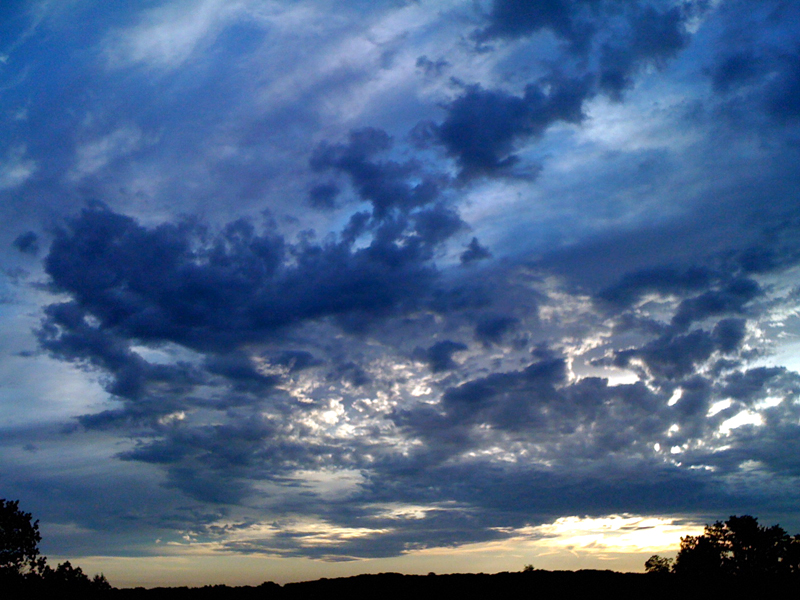
I catch my breath every time I enter the garden through the front gate and turn towards the house.  The copper garden has grown huge, a bower of bright and dark coppery colors celebrating autumn early.  The Coleus have gone to flower and the ornamental sweet potato leaves are lacy with insect nibbling but the color!  The brass section of the Pittsburgh Symphony Orchestra was magnificent this weekend in its performance of “Pictures at an Exhibition” – it seems those grand brass flourishes have translated directly into the September garden.  I turn to look down the stone steps and the color continues, like a brilliant fanfare of red and gold and every shade between.  I look up at the decks from the side and deep warm colors overflow from every pot and hayrack.

This slideshow requires JavaScript.

After a large tree fell on the decks last year, I had an opportunity to refurbish the renovated spaces.  I was inspired and challenged by garden artist Keeyla Meadows’  remarkable book “Fearless Color Gardens: The Creative Gardener’s Guide to Jumping Off the Color Wheel.”  I have worked with color in the garden for years, but this book stretched my notions of what was possible.  I took the plunge into bolder color on the upper deck, inspired by a Mad Mats outdoor carpet and my love for dark foliage.  This was the opportunity to revel in the warm tones – apricot, peach, gold, orange, rust, burgundy. I painted a table and chairs, added a bench with pillows, and filled up pots and hayracks with ornamental sweet potatos, petunias, Agastache, Million Bells, zinnias, and cherry tomatoes.  It has become my morning haven, the perfect place to drink in a large draft of glorious color while I write and think.  Unexpectedly, it has also become a haven for bees, butterflies, moths, and hummingbirds.  The deck is small and perched high among the treetops, a promontory for viewing the garden below.  In another month, the trees will shift from summer green to the gold and scarlet of autumn – I look forward to a spectacular flourish to end the gardening concerto for another year.

All photos and text of “Brass Fanfare in the Garden” ©2011 Lynn Emberg Purse, All Rights Reserved

Fire and Light: when the idea is too big

Only light – not things – strikes the retina.
                 Derek Doeffinger, “The Art of Seeing”

Sometimes an idea is just too big to handle.  I’ve been struggling for a few weeks with the last piece in “The Four Elements” – a musical exploration of earth, air, water, and fire.  The first three pieces are written and came fairly easily, two have been performed, but I struggled with the final “element” – fire.  Water, air and earth – these are the stuff of making gardens and seem like old friends.  But fire?  I felt stuck and overwhelmed until I realized that the pieces already written are about specific manifestations of the elements – earth as “Clay,” water as “Rain,” air as “Breath.”  Eureka!  Fire as “Light” – the essential element for growth and life.  It made me reflect that I made the classic mistake of creative folk – I picked a subject too big, too broad.  A point worth remembering for my self, for my students. Pick a particular manifestation of a concept that seems unapproachable and focus on your experience of it.  Discover the power and meaning it holds for you personally – there is less chance of being trapped by pre-conceived notions  and more chance of translating your particular experience into something universal that resonates with others.

This slideshow requires JavaScript.

When I made the connection between the big idea and the microcosm of my own life, I had something to explore and everything changed. Fire – too big for me to handle, even after exploring videos of of everything from molten lava flows to forest fires. The sudden realization of “fire equals light” gave me the personal, the particular.  As a photographer and a gardener, light is everything, defines everything.  While it may still seem a big idea, it is very specific for me: the light sifting between trees, light breaking through clouds, that peculiar moment of diffused light at the end of the day when the garden takes on an otherworldly glow.  The light I try to capture with my camera, the reflected light of the moon that keeps me awake at night, the odd non-directional light in my dreams when I do fall asleep.

Now, ironically, I am “on fire” with the idea of light.  Lyrics and sound flood my imagination, photos and video present themselves for the performance media. The gate is open; I can’t wait to begin.

All photos and text of “Fire and Light: When the Idea is Too BIg” ©2011 Lynn Emberg Purse, All Rights Reserved

Anatomy of a thunderstorm

I hear the thunder, long rumbles moving through the hills but no rain – perfect for recording. I dash inside to grab my Zoom recorder, ask my husband to turn down the guitar parts he is practicing in the basement, and put the dog in her “safe” space in the house.

For the first few minutes, I record the thunder – deep booms rather than sharp cracks – but the echoes roll on and on. It is quickly approaching, each boom louder than the last and I’m getting a great signal on the recorder. Suddenly I realize that sound in nature is complex with nothing isolated; although my goal is to record some great thunder sounds without the added sound of rain, I cannot capture it as I had planned – a murmur of cicadas fills the aural space, punctuated by bird song and a hum of distant traffic. I’ve been in the recording studio too long, where every instrument and sound source is isolated and remixed, each thread separated and reassembled. This is a different space altogether, with layers of sound rising and falling underneath the drama of a weather event, a gestalt of sound.

It’s not long before the rain comes – I grab the Zoom and head for the protection of the covered deck but decide to leave the record button on and capture the entire event. At first, the rain is a gentle swishing curtain of sound but it soon builds to a pounding roar slicing through the trees, hammering the roof. A hummingbird still trying to feed gives up and flits into the woods for cover. There is a complex rhythm to it all, an aural story of sounds intertwined in a bigger than life tableau. I wonder how long it has been since I’ve sat outside and really listened to an entire thunderstorm from beginning to end, resisting the urge to refill my coffee cup or check my e-mail. Years, probably. Yet, because I wanted to capture the entire event, I relax and listen and surrender to the moment. I become aware of the progression of the storm as if I were in a concert hall, the quiet passages, the crescendos, the bold dramatic punctuations, and the unexpected layers of birds and insects that remained a part of the aural tapestry.

Finally the rain trickles to a few drops, the cicada buzz rises to the fore again, a car passes by splashing through the puddles, and a crow caws in the distance. Cardinals and woodpeckers chime in and the hummingbird reappears. Water quietly drips from the trees, the woods around me take on a golden glow as the clouds drift away. A soft murmur of thunder leaves a trail of sound in the distance.

Here is an abbreviated version of the thunderstorm that I recorded (reduced from 20 minutes to less than 2 – kudos to Bill Purse, audio editor.)

To see what others are doing with environmental sound as art, visit Ear to the Earth.

All text, photos, and audio ©2011 Lynn Emberg Purse, All Rights Reserved