Floral Fireworks

The temple bell stops but I still hear the sound coming out of the flowers. ~Basho

My father was born on the 4th of July, so we always had a double reason to celebrate the holiday. And did we ever! As a family of musicians, we transformed our neighborhood block party into a morning parade, recruiting my father’s band students and anyone in the neighbor who could play The Stars and Stripes Forever while marching. The rest of the day was an ongoing musical feast in the form of continuous jam sessions, the repertoire ranging from jazz standards to German polka band arrangements. Sometimes there were local fireworks at night but more often, we lit sparkler wands and drew pictures in the night air to a backdrop of fireflies (locally known as lightening bugs) who ignored our fiery antics.

Now my 4th of July is usually spent enjoying the floral fireworks in the garden. Daylilies of all shapes, colors, and sizes are the feature, surrounded by true lilies, salvias, roses, flowering shrubs and clematis. 4th of July fireworks indeed!  Enjoy the images (click on any photo to trigger the gallery slideshow) and have a happy and safe holiday. (All images ©2014 Lynn Emberg Purse, All Rights Reserved)

 If you take a flower in your hand and really look at it, it’s your world for a moment. ~Georgia O’Keeffe

For my followers, I’ve wrapped up a demanding and complicated few months and am happy to return to blogging, gardening and composing. I look forward to visiting your sites and seeing what is new with you 🙂

Willy-nilly

“Willy-nilly” – in a haphazard or spontaneous manner  ~ The Free Merriam-Webster Dictionary

Iris reticulata 'Harmony'

Iris reticulata ‘Harmony’

Yesterday, the warmth and sunshine of a beautiful April day lingered into evening, a perfect time to work in the garden. I had an agenda, a list – prune the roses, rake the leaves, pull the weeds. I pruned the blackened branches of roses that were damaged by a harsh winter and was delighted to discover green growth at the roots. That was as far down the list as I got. I paused to smell the wind carrying the scent of spring, I watched a pair of robins argue over territory, and my feet wandered over the paths drawn to bits of green and blue and yellow arising from the ground.

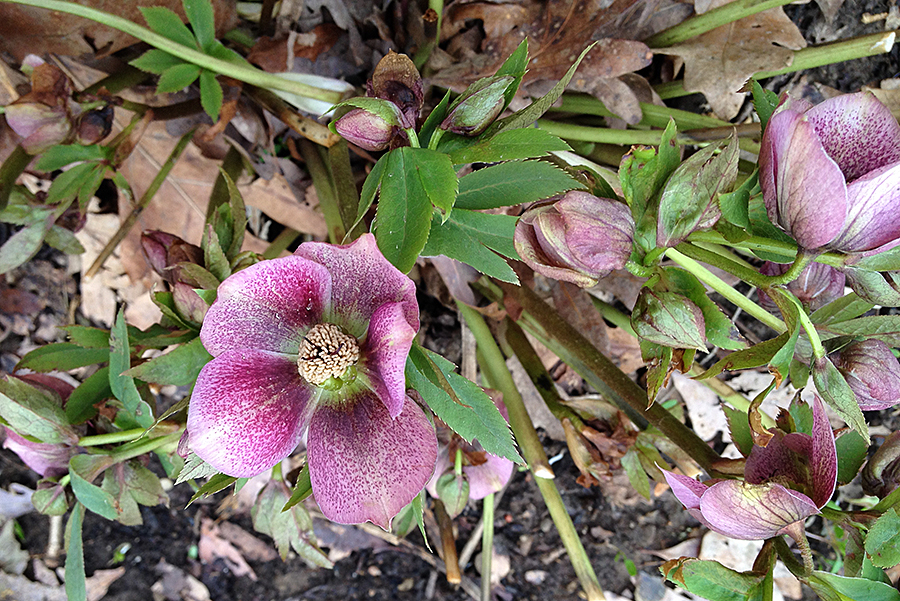
Rose hellebore

Rose hellebore

The “to do” list was forgotten and I moved willy-nilly through the garden, meandering, clipping here and there as I went, without plan or order. At work, I am the planner, the doer, the architect of outcomes. But on entering the garden, the plan became a burden that I happily surrendered. I shilly-shallied through a garden lit by golden evening light, my ears open to bird song while my fingers stroked the tender new leaves emerging from the earth. I began to dream instead of plan, I began to imagine instead of control, I began to be instead of act.

Daffodil 'Verdant Meadow'

Daffodil ‘Verdant Meadow’

After a few hours of meandering with snippers in hand, caught up in the magic of a gentle spring evening, I discovered that my hands had pruned the hydrangeas, weeded the garden beds and cleared last year’s leaves from the stone steps. The garden was clear of debris and ready to grow. My orderly list of chores was somehow accomplished as part of a relaxed ramble, an afterthought to the real business of connecting with the magical world around me. Perhaps I need a little more willy-nilly time and allow myself to be a dreamer and a sillyheart more often.

“I don’t think I want to know a six-year-old who isn’t a dreamer, or a sillyheart.” ~ Uncle Buck

All Things Being Equal

hellebore budsYesterday, we reached the equinox where night and day are equal in length. The official start of the spring season in the northern hemisphere, the day was cold and windy, winter lingering in reality in spite of the calendar and the turning of the world. Yet, the birds knew it had begun. The sound of morning outside my door has evolved from the spare songs of winter, lonely calls punctuating the silence of a sleeping world to the bubbling  orchestra of songs and calls that greeted me this morning when I stepped outside. More than anything else, the sounds of returning birds signals the massive change about to occur in the natural world.

The sound of morning birdsong in January. 

The sound of morning birdsong in late March. 

snowdropsThe snowdrops began blooming last week and the hellebores are starting to show their flower buds (see above).  Yes,the garden is beginning to emerge but bloom will be about two weeks later than normal, or at least what has become normal in our changing climate. I’ve already pruned most of the shrubs and trees and began raking the leaves scattered and mounded by winter winds. For me, the garden season has begun, another year of beauty and adventure. Regardless of the weather, I long to spend every moment outside, a witness and participant as the world comes to life. But for now, March is demonstrating its unsteady temperament; this morning’s sunshine has been replaced by a wintery snowfall. March snow

Interested in seeing what the world looked like on the day of the spring equinox? See the photo from space at space.com and learn more about the phenomenon of the vernal equinox. Think spring!

Pink October

The crickets still sing in October. And lilly, she’s trying to bloom. Tho she’s resting her head on the shoulder of death, she still shines by the light of the moon. ~Kevin Dalton

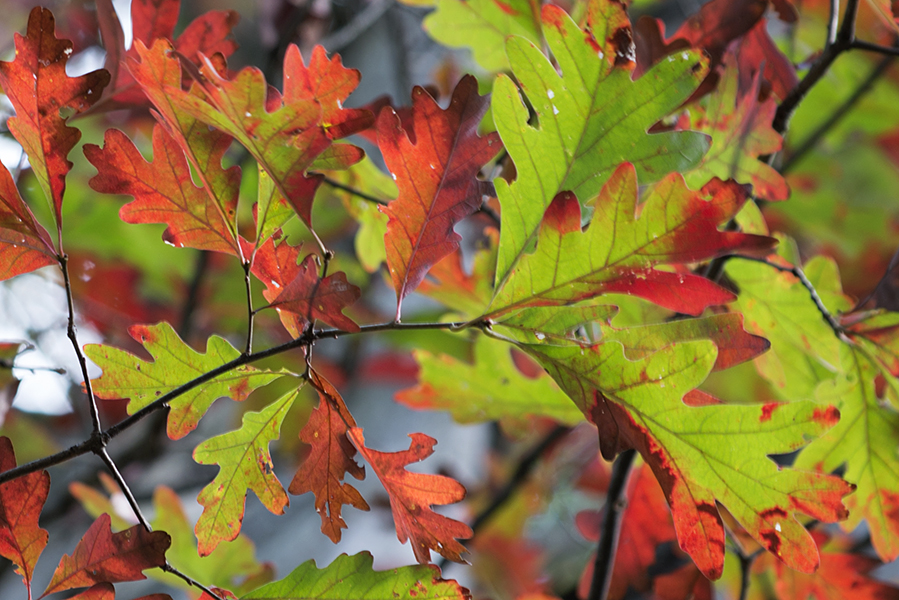
oak leavesOverhead, the oak leaves signal that October has truly arrived. Last night’s full moon and crisp temperatures ushered in the feel of autumn and it won’t be long before the first hard frost arrives. In the garden, the flowers are ignoring nature’s signals and continue blooming as if it were June. A sharp contrast to the gold and bronze leaves drifting into their midst, the garden beds are woven with threads of pink, rose, and magenta and are full of fragrance and life. Pollinators collect food in a last minute grab for stocking the winter larder and the cicadas and crickets sing in the woods. Enjoy a few images of what is surely this year’s last flush of bloom; click on any photo below to start the slide show. (All photos ©2013 Lynn Emberg Purse, All RIghts Reserved.)

I’m so glad I live in a world where there are Octobers. It would be terrible if we just skipped from September to November, wouldn’t it? ~ L.M. Montgomery, Anne of Green Gables

Plant a Flower, Save the World

Bees do have a smell, you know, and if they don’t they should, for their feet are dusted with spices from a million flowers. ~Ray Bradbury, Dandelion Wine

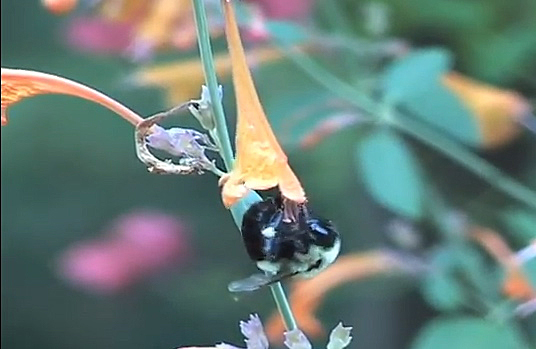
Bee in flowerI’ve been dreaming about bees lately. I’m allergic to their stings, so it can be a bit alarming when they follow me around Dreamland. Nevertheless, I love seeing them in the garden and welcome their beauty and soft buzzing sound.

A TED talk recently reminded me of how important bees are to our planet and food supply. Each one of us can make a difference if we plant a flower. Perhaps some of you see flowers as important only for their aesthetic beauty and regard vegetables as the practical heart of the garden, but that is not the whole picture. Without flowers, we have no pollinators, and without pollinators we have no fruits and vegetables. Recent field studies show that planting a few flowers can change the ecology of any landscape for the better as well as provide food for insects and birds. So please your eye and please your palate – plant a flower and make the world a better place.

TED Talks: Why Bees are Disappearing 

Immerse your self in the wonder of pollinators with Schwartzberg’s The Hidden Beauty of Pollination (pollinator footage starts around 3:15)

For a look at how flowers affected the evolution of our world, read National Geographic’s The Big Bloom – How Flowering Plants Changed the World

The Penn State Extension has a great guide for planting Pollinator Friendly Gardens.

Doug Tallamy’s site Gardening for Life: Bringing Nature Home gives even more insight and suggestions on the importance of native plants for sustaining our natural world.

Deborah DeLong has a lovely blog, Romancing the Bee, on urban beekeeping, gardening, and cooking with honey.

If the bee disappeared off the face of the earth, man would only have four years left to live. ~Albert Einstein