Arcadian Tone Poems

Arcadia – a region of ancient Greece that is “a poetic byword for an idyllic vision of unspoiled wilderness.” ~Wikipedia

James Houlik

James Houlik

Two weeks ago, Arcadian Tone Poems, a piece for tenor saxophone and orchestra was premiered. It is always an exciting event, to attend the public “unveiling” of something created in the privacy of my studio. A composition never seems complete until it is performed, and what a performance! Our marvelous Duquesne University Symphony Orchestra played with verve and skill under the direction of Jeffrey Turner and, as you will hear, James Houlik’s performance on saxophone is that of a master.

I was asked by the director to create something fun and accessible, with lots of variety in mood and tone color and to showcase the artistry of James, an extraordinary master of the classical tenor saxophone. Immediately the idea of writing a suite of tone poems came to mind, the perfect medium in which to explore the tonal colors of the saxophone and orchestra.

Evening in Arcadia by Thomas Cole

Evening in Arcadia by Thomas Cole

Tone poems, or symphonic poems, arose as a musical form in the 19th century Romantic era of music, and are “intended to inspire listeners to imagine or consider scenes, images, specific ideas or moods.” When searching for a way to feature the classical saxophone in an imaginary landscape, the idea of a pipe or horn being played in the wilderness suggested the role of the shepherd moving through the landscape and describing its beauty through music. “Arcadia is associated with bountiful natural splendor, harmony, and is often inhabited by shepherds” and so the idea for a suite of four tone poems was born.

The program notes from the premiere:

Written to showcase the saxophone artistry of virtuoso James Houlik, “Arcadian Tone Poems” is a series of aural impressions of the mythic land of Arcadia. Ancient Greeks envisioned a pastoral paradise of hills and valleys, mountains, streams, and forests, populated by the ancient gods. Imagine a contest of aerial acrobatics between birds over a meadow strewn with flowers, or a broad flowing river rushing through the mountains, carrying water sprites on the foam. Perhaps Pan, the ruler of Arcadia, is playing a haunting melody deep in a cathedral forest punctuated by columns of light, or Zeus and his sons amuse themselves with a dramatic game of throwing thunderbolts across the hills. Each movement is meant to be an imaginary stroll through a different aspect of this ancient paradise.

Here’s a montage of selections from each movement of Arcadian Tone Poems 

Here is an audio file of the complete third movement, “Shadow and Light”  (©2013 Lynn Emberg Purse)  

A special thanks to my husband, Bill Purse, for his formidable skills as audio engineer and producer in the process of mixing and mastering the concert recording.

Read more about the creation of Arcadian Tone Poems in Playing With Thunder.

Pink October

The crickets still sing in October. And lilly, she’s trying to bloom. Tho she’s resting her head on the shoulder of death, she still shines by the light of the moon. ~Kevin Dalton

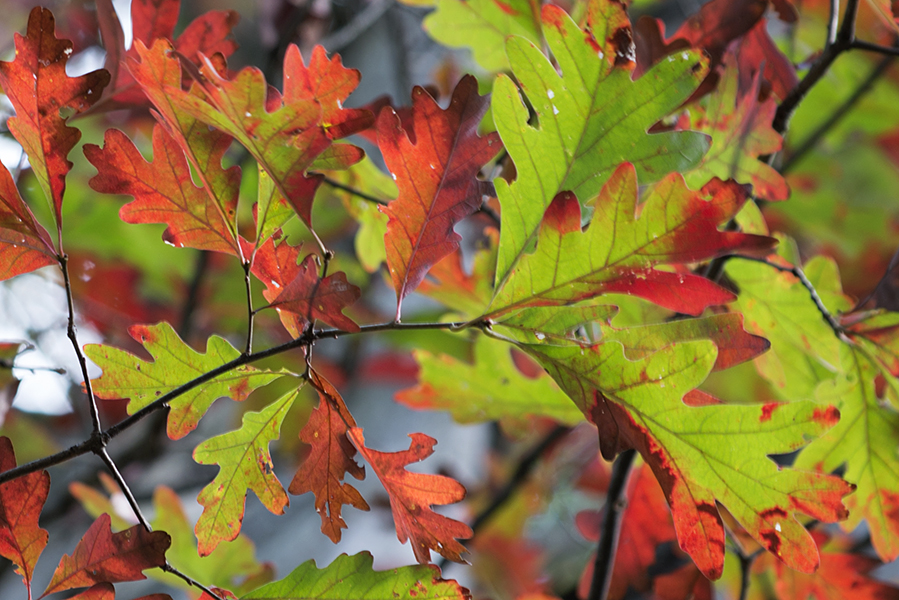
oak leavesOverhead, the oak leaves signal that October has truly arrived. Last night’s full moon and crisp temperatures ushered in the feel of autumn and it won’t be long before the first hard frost arrives. In the garden, the flowers are ignoring nature’s signals and continue blooming as if it were June. A sharp contrast to the gold and bronze leaves drifting into their midst, the garden beds are woven with threads of pink, rose, and magenta and are full of fragrance and life. Pollinators collect food in a last minute grab for stocking the winter larder and the cicadas and crickets sing in the woods. Enjoy a few images of what is surely this year’s last flush of bloom; click on any photo below to start the slide show. (All photos ©2013 Lynn Emberg Purse, All RIghts Reserved.)

I’m so glad I live in a world where there are Octobers. It would be terrible if we just skipped from September to November, wouldn’t it? ~ L.M. Montgomery, Anne of Green Gables

Plant a Flower, Save the World

Bees do have a smell, you know, and if they don’t they should, for their feet are dusted with spices from a million flowers. ~Ray Bradbury, Dandelion Wine

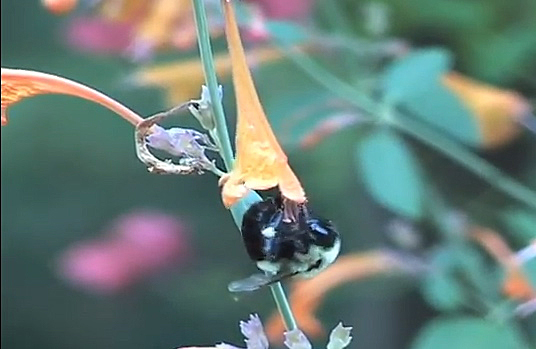
Bee in flowerI’ve been dreaming about bees lately. I’m allergic to their stings, so it can be a bit alarming when they follow me around Dreamland. Nevertheless, I love seeing them in the garden and welcome their beauty and soft buzzing sound.

A TED talk recently reminded me of how important bees are to our planet and food supply. Each one of us can make a difference if we plant a flower. Perhaps some of you see flowers as important only for their aesthetic beauty and regard vegetables as the practical heart of the garden, but that is not the whole picture. Without flowers, we have no pollinators, and without pollinators we have no fruits and vegetables. Recent field studies show that planting a few flowers can change the ecology of any landscape for the better as well as provide food for insects and birds. So please your eye and please your palate – plant a flower and make the world a better place.

TED Talks: Why Bees are Disappearing 

Immerse your self in the wonder of pollinators with Schwartzberg’s The Hidden Beauty of Pollination (pollinator footage starts around 3:15)

For a look at how flowers affected the evolution of our world, read National Geographic’s The Big Bloom – How Flowering Plants Changed the World

The Penn State Extension has a great guide for planting Pollinator Friendly Gardens.

Doug Tallamy’s site Gardening for Life: Bringing Nature Home gives even more insight and suggestions on the importance of native plants for sustaining our natural world.

Deborah DeLong has a lovely blog, Romancing the Bee, on urban beekeeping, gardening, and cooking with honey.

If the bee disappeared off the face of the earth, man would only have four years left to live. ~Albert Einstein

The Year’s Last, Loveliest Smile

“Autumn…the year’s last, loveliest smile.”
~WIlliam Cullen Bryant

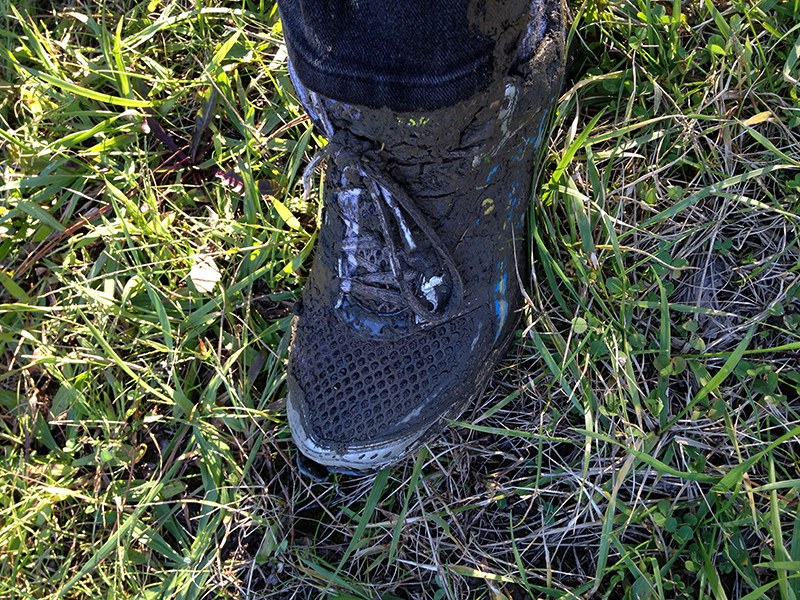
muddy shoeAutumn is officially here in the Northern Hemisphere. I’ve been busy lately filming nature’s habitats for my A Year in Penn’s Woods project. On this past solstice weekend, I filmed scenes at a lake in the county park near our home. This lake was dredged and restored a year ago and is again filled with a rich diversity of plants and wildlife. Summertime was over, but the fish were still jumpin’ in the lake. Geese, ducks, and a beautiful blue heron graced the water. Yes, I lost a shoe to the mudflats that morning, having ventured too close to the water to find the right spot for filming. The water saturated mud sucked the tightly laced shoe right off of my foot and soaked through the other one; it seemed more important at the time to save the photography equipment rather than the hapless shoe. Undeterred, I continued filming in muddy socks on firmer ground. Lesson learned for future ventures.

Autumn solstice moon

The night of the solstice was magical; a moon slightly past full held court in the heavens wreathed by feathery garlands of clouds. The night was warm; the thrum and buzz of cicada and frog song created the illusion of a summer night instead of the advent of the autumn solstice. As the frog and insect chorus died away, the late evening concert was completed by the soft hoot of an owl in the woods. Although I am still editing the video footage I captured, I grabbed some still shots out of the video to share.  Enjoy!
All photos © 2013 Lynn Emberg Purse, All Rights Reserved.

“At no other time (than autumn) does the earth let itself be inhaled in one smell, the ripe earth; in a smell that is in no way inferior to the smell of the sea, bitter where it borders on taste, and more honeysweet where you feel it touching the first sounds. Containing depth within itself, darkness, something of the grave almost.” ~ Rainer Maria Rilke

September Song

Oh, it’s a long long while from May to December,
But the days grow short when you reach September. ~lyrics by Maxwell Anderson, from September Song

Sweet Autumn Clematis

Those long summer evenings are gone, borne away on the boom and crack of violent thunderstorms. Perhaps a few more warm nights remain, filled with the summer songs  of cicadas and frogs, but the weather is quickly changing to the cool short days of fall. It has been an odd summer – weather spinning from torrential rains and steamy days to the occasional stretch of dry sunny weather. Now the garden is filled with the sunny blooms of goldenrod and black-eyed susan; the last crop of cherry tomatoes glisten in shiny red cascades, and a giant cloud of fragrant white stars covers the sweet autumn clematis climbing up the fence and into the trees. All the creatures are busy filling their larders against the coming winter, from spiders bundling up yellow jackets caught in their webs to squirrels and chipmunks gathering acorns under the oak trees. The hummingbirds and most of the butterflies have headed south and flying V’s of geese are starting to follow them. Next week, the autumn solstice returns and summer will be truly gone.

As I wander the garden these days, pruning and weeding in preparation for bulb planting, I keep hearing the lovely “September Song” in my mind.  Here are a few images from the final days of the garden and a lovely clip of Ella Fitzgerald singing Kurt Weil’s haunting song. It is a lovely experience to start the music as a soundtrack before exploring the photos. (Click on any image to start the slide show – all images ©2013 Lynn Emberg Purse.)