Penn’s Woods: Autumn Equinox

If you look deep enough you will see music; the heart of nature being everywhere music. ~Thomas Carlyle

A few days ago, I made a presentation at a national music conference on my “A Year in Penn’s Woods” project. Having to encapsulate my work in 25 minutes pushed me to review what I’ve done so far, create a succinct presentation of my project, and produce a short video demonstrating some of my musical and visual ideas.
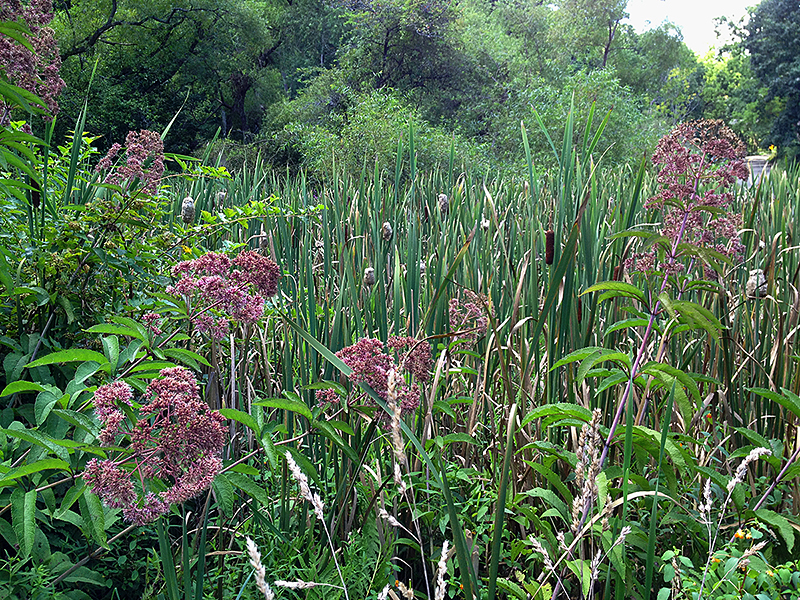
Wetland habitat, western Pennsylvania

Wetland habitat, western Pennsylvania

Pressure can be useful for inner clarification; working on the presentation led me to review the hours of audio and video recorded so far, assess the quality of the work, and decide on technical and artistic refinements to the process. I originally expected this project to be completed in a year’s time, but have found that to be unrealistic. I’ve added another year to the timeline, but what I now realize is that I love doing this work and in actuality, I may be pursuing this project for many years to come. There is great joy in being in nature, listening to the sounds, seeing the beauty, and feeling deeply connected to the world around me. I’ve coined the music I am attempting to compose as “eco fusion” – the integration of the soundscape of the natural world with composed music.

Here is my first experiment in combining the sound of birds, insects, frogs, and other denizens of the western Pennsylvania habitats with visuals filmed during this year’s autumn equinox. The soundtrack music is designed to support and enhance nature’s orchestra without overwhelming it. While the musical pieces in “The Year in Penn’s Woods” project will vary from orchestral to small ensembles to electronic soundtracks, ultimately my goal is to be an interpreter of what I see and hear in nature, rather than to merely illustrate it. As I emphasized in my conference presentation, I want to join this band! I want to write for this orchestra! This is a first step. Enjoy! (Click on the video to play, or click on the Vimeo link to watch in full HD)  If you have a problem viewing the Vimeo version, here is a link to a smaller mobile device friendly version on YouTube.

All text, music and video ©2013 Lynn Emberg Purse, All Rights Reserved

Read more about the genesis of this project in Wild Sounds.

No spring, nor summer beauty hath such grace,
As I have seen in one autumnal face. ~John Donne

A special thanks to Joan for pointing out that it is the autumn equinox rather than the autumn solstice.
Arcadian Tone Poems

Arcadia – a region of ancient Greece that is “a poetic byword for an idyllic vision of unspoiled wilderness.” ~Wikipedia

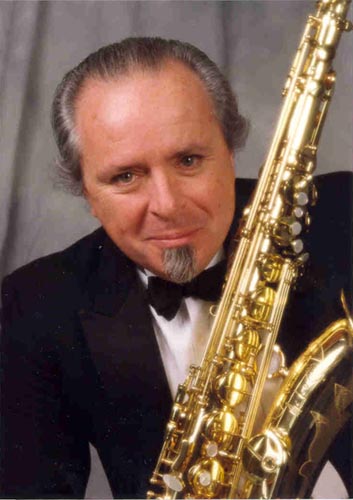
James Houlik

James Houlik

Two weeks ago, Arcadian Tone Poems, a piece for tenor saxophone and orchestra was premiered. It is always an exciting event, to attend the public “unveiling” of something created in the privacy of my studio. A composition never seems complete until it is performed, and what a performance! Our marvelous Duquesne University Symphony Orchestra played with verve and skill under the direction of Jeffrey Turner and, as you will hear, James Houlik’s performance on saxophone is that of a master.

I was asked by the director to create something fun and accessible, with lots of variety in mood and tone color and to showcase the artistry of James, an extraordinary master of the classical tenor saxophone. Immediately the idea of writing a suite of tone poems came to mind, the perfect medium in which to explore the tonal colors of the saxophone and orchestra.

Evening in Arcadia by Thomas Cole

Evening in Arcadia by Thomas Cole

Tone poems, or symphonic poems, arose as a musical form in the 19th century Romantic era of music, and are “intended to inspire listeners to imagine or consider scenes, images, specific ideas or moods.” When searching for a way to feature the classical saxophone in an imaginary landscape, the idea of a pipe or horn being played in the wilderness suggested the role of the shepherd moving through the landscape and describing its beauty through music. “Arcadia is associated with bountiful natural splendor, harmony, and is often inhabited by shepherds” and so the idea for a suite of four tone poems was born.

The program notes from the premiere:

Written to showcase the saxophone artistry of virtuoso James Houlik, “Arcadian Tone Poems” is a series of aural impressions of the mythic land of Arcadia. Ancient Greeks envisioned a pastoral paradise of hills and valleys, mountains, streams, and forests, populated by the ancient gods. Imagine a contest of aerial acrobatics between birds over a meadow strewn with flowers, or a broad flowing river rushing through the mountains, carrying water sprites on the foam. Perhaps Pan, the ruler of Arcadia, is playing a haunting melody deep in a cathedral forest punctuated by columns of light, or Zeus and his sons amuse themselves with a dramatic game of throwing thunderbolts across the hills. Each movement is meant to be an imaginary stroll through a different aspect of this ancient paradise.

Here’s a montage of selections from each movement of Arcadian Tone Poems 

Here is an audio file of the complete third movement, “Shadow and Light”  (©2013 Lynn Emberg Purse)  

A special thanks to my husband, Bill Purse, for his formidable skills as audio engineer and producer in the process of mixing and mastering the concert recording.

Read more about the creation of Arcadian Tone Poems in Playing With Thunder.

The Year’s Last, Loveliest Smile

“Autumn…the year’s last, loveliest smile.”
~WIlliam Cullen Bryant

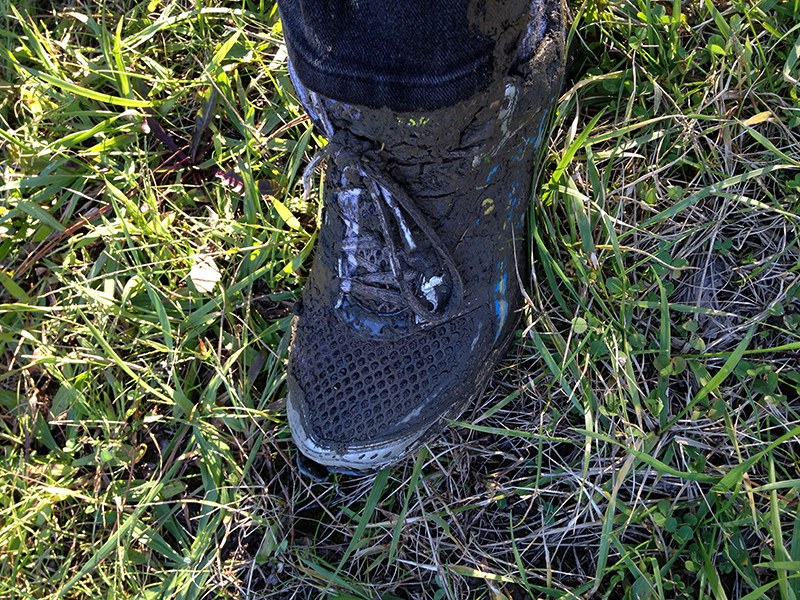
muddy shoeAutumn is officially here in the Northern Hemisphere. I’ve been busy lately filming nature’s habitats for my A Year in Penn’s Woods project. On this past solstice weekend, I filmed scenes at a lake in the county park near our home. This lake was dredged and restored a year ago and is again filled with a rich diversity of plants and wildlife. Summertime was over, but the fish were still jumpin’ in the lake. Geese, ducks, and a beautiful blue heron graced the water. Yes, I lost a shoe to the mudflats that morning, having ventured too close to the water to find the right spot for filming. The water saturated mud sucked the tightly laced shoe right off of my foot and soaked through the other one; it seemed more important at the time to save the photography equipment rather than the hapless shoe. Undeterred, I continued filming in muddy socks on firmer ground. Lesson learned for future ventures.

Autumn solstice moon

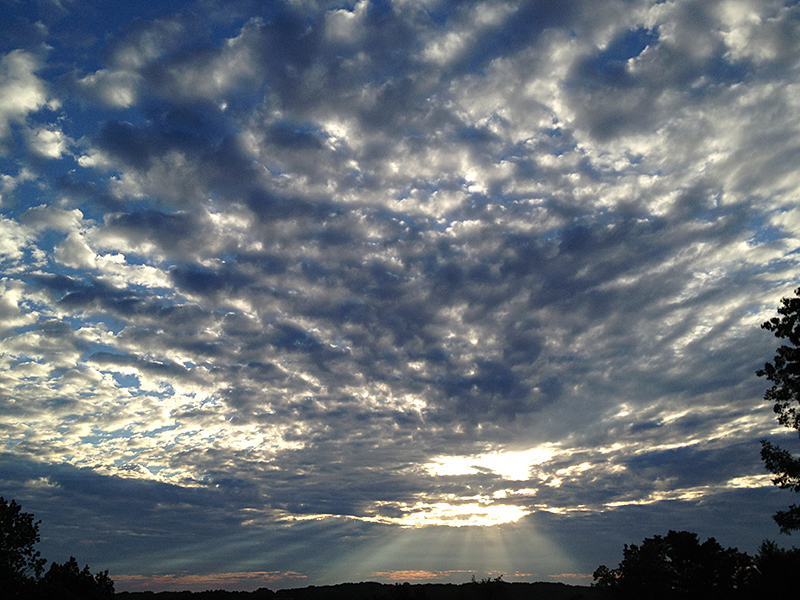
The night of the solstice was magical; a moon slightly past full held court in the heavens wreathed by feathery garlands of clouds. The night was warm; the thrum and buzz of cicada and frog song created the illusion of a summer night instead of the advent of the autumn solstice. As the frog and insect chorus died away, the late evening concert was completed by the soft hoot of an owl in the woods. Although I am still editing the video footage I captured, I grabbed some still shots out of the video to share.  Enjoy!

All photos © 2013 Lynn Emberg Purse, All Rights Reserved.

“At no other time (than autumn) does the earth let itself be inhaled in one smell, the ripe earth; in a smell that is in no way inferior to the smell of the sea, bitter where it borders on taste, and more honeysweet where you feel it touching the first sounds. Containing depth within itself, darkness, something of the grave almost.” ~ Rainer Maria Rilke

Endings and Beginnings

Sunrise

I awoke early last Monday morning, feeling as if I were on the “champagne stage” of the Tour de France, where the victorious pedal into Paris for the last leg of a long race while sipping champagne. I had just finished composing my saxophone concerto the night before; all that was left to do was a little tweaking and formatting. Angel and I took a walk at dawn, witnessing a spectacular sunrise through storm clouds that were passing away, an apt visual metaphor for the intense few months I had spent writing this piece. I was on the champagne stage now – just a few more hours of studio time and I would indulge in a glass of prosecco at the end of the day.

Hydrangea 'Limelight'

The world changed while I was preoccupied in my studio. I vaguely remember seeing the garden when I came out to visit for an hour or two each day, but my head was full of music and I wasn’t really paying close attention.  Now that I’ve had a week to reorient myself, I’m a bit taken aback. I feel as if I’ve gone through a magical revolving door from the gaudy splendor of the July garden to the mellow pace of August. A few daylily blooms persist but the color banner is carried forward by the large blowsy flowers of PeeGee Hydrangeas, Rose of Sharon, tall stands of garden phlox, the bright daisy forms of Echinacea and Rudbeckia, and the fresh rebloom of roses.

It is now a more relaxed garden, requiring a relaxed butterflyWPattitude towards the insect damaged leaves of blooming plants and a tolerance for the gradual disintegration of carefully crafted color combinations. The quiet of dusk and dawn have been filled with a raucous chorus of cicadas by day and the bold throbbing songs of tree frogs by night. Flocks of butterflies cover the Buddleia (butterfly bush) by the deck and hummingbirds in two’s and three’s feed on the Salvias nearby.

July has ended, August has begun and their sights and sounds are distinctly different. It has taken me a week to begin writing in words instead of notes, and of raising the camera to my eye once again.  Here are a few portraits of the garden in August. Enjoy, and perhaps join me in a glass of champagne to celebrate the beauty of endings and beginnings.

When you’re young you prefer the vulgar months, the fullness of the seasons. As you grow older you learn to like the in-between times, the months that can’t make up their minds. Perhaps it’s a way of admitting that things can’t ever bear the same certainty again. ― Julian BarnesFlaubert’s Parrot (courtesy of Good Reads)

Playing With Thunder

A Beam of Light ©2011 Lynn Emberg Purse, All Rights ReservedIt has been a tough month; almost daily thunderstorms with copious rain have become the norm. My garden is a swamp and many hours have been spent in the basement holding Angel, my lovely standard poodle, in my arms as a comforting shield against the sub-sonic power of a thunderstorm. My third (!) blog post, Anatomy of a Thunderstorm, included a recording of an August storm captured on my Zoom recorder. So?

Irvington_statue_of_Rip_van_Winkle

Rip van WInkle statue

If you haven’t seen me recently visiting your blogs, there is a reason. I am now in my studio, where I have been for weeks, putting the final touches on a large concerto piece for tenor saxophone and orchestra called “Arcadian Tone Poems” (more about that next week!) One of the movements “Playing With Thunder” draws on that recording that I made two years ago. Many myths and stories surround thunder, including Washington Irving’s American tale of Rip Van Winkle with men playing “nine pins” in the sky as well as that of the Greek Elysian Fields, the final resting places of the souls of the heroic and the virtuous, evolved from a designation of a place or person struck by lightening. (see Wikipedia) I prefer to think of thunder as a loud and boisterous conversation between yesterday’s weather hanging around too long and the new front moving in to claim temporary territory . . . or, perhaps a machismo conversation between Thor and Zeus.

So, enough said; I am deep in the completion of “Playing With Thunder” and must return to the task at hand, even though the sound of it seems to be frightening Angel all over again. Here is a link to Anatomy of a Thunderstorm. Be not afraid, it is just an evolving and sometimes raucous conversation event 🙂